Quick summary
- WebGPU, TSL, and Three.js experiments show web 3D moving toward dynamic rendering experiences. For product teams, the value lies in controlling scope, quality, and fallback—not in adding effects by default.
- WebGPU expands the design space for interactive graphics, while demanding explicit choices about device conditions, performance budgets, and degradation.
- Pick a non-critical experience, build a small WebGPU prototype, and define initialization, minimum-quality, and fallback budgets before expansion.
What happened
WebGPU is appearing in Three.js experiments not merely as a new API, but as a basis for organizing dynamic visual experiences. A music-reactive Three.js and WebGPU project and a small WebGPU and TSL experiment make that creative momentum visible.
For production teams, the more important question is which part of an experience truly needs that GPU pipeline—and how it behaves under less-than-ideal conditions.
The shift is toward continuously changing scenes
Interactive 3D, signal-reactive visuals, and procedural geometry all favor scenes that are computed continually. That differs from embedding a static 3D asset: data, shader work, draw work, and rendering cadence now contribute to the cost together.
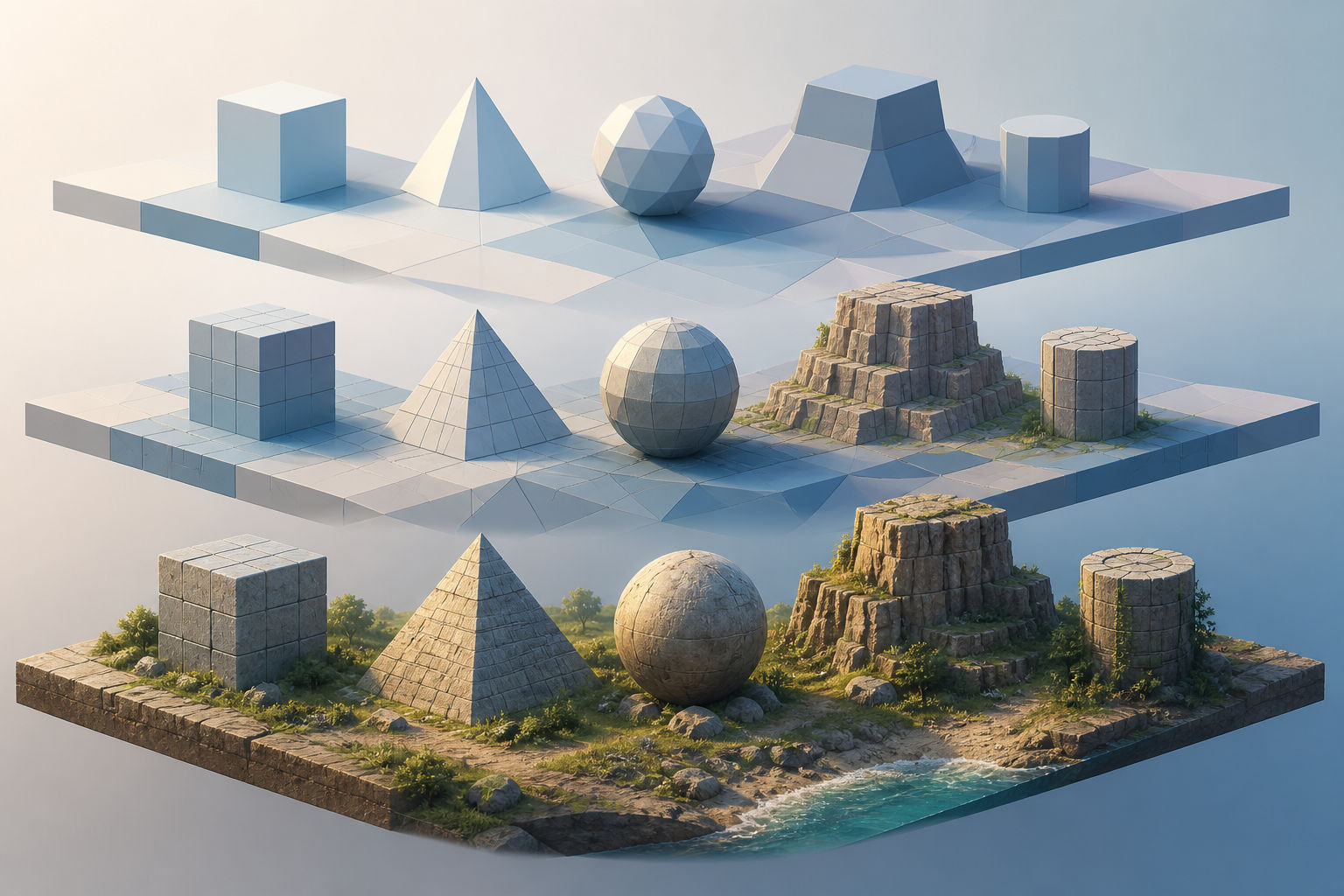
A tutorial on procedural geometry with Three.js and WebGPU reflects the direction. Rule-generated form can reduce reliance on fixed assets, but it does not remove the need to control scene complexity.
TSL and Three.js do not make product decisions for you
TSL provides a higher-level way to express shader logic within the Three.js ecosystem. That abstraction does not settle choices around render resolution, object counts, animation duration, or behavior on a constrained GPU.
Use the tools to shorten experimentation; keep predictable user experience as the shipping criterion.
Build progressive levels, not a single required path
- Make 3D an enhancement rather than a gate to core content or actions.
- Set explicit budgets for initialization time and scene size.
- Adapt quality at runtime instead of optimizing for one device profile.
- Provide a meaningful alternate experience when the effect is unavailable.
Where a trial makes sense
Campaign pages, intentional data visualizations, and creative tools are sensible trial sites. Dense business systems need a stronger case that graphics cost will not impair task completion.
In 5 Minutes
- WebGPU is enabling more dynamic web 3D.
- Procedural geometry changes scene creation, not rendering cost.
- TSL speeds experiments but does not replace performance budgets.
- Ship 3D as progressive enhancement with a fallback.
Sources
- Sixty Frames for the Record: A Three.js Game, Seven Fly-Throughs, and a Wall of CRTs
- Run Rob Run: Building a Music-Reactive Goo with Three.js and WebGPU
- Relighting Images with Depth Maps and Three.js
- Creating an Interactive 3D Cluster with Three.js, TSL and Three Start
- Exploring Procedural Geometry with Three.js and WebGPU
- Garden Anomaly: A Tiny WebGPU and TSL Experiment
- High-Frequency Real-Time Data in React: From Ring Buffers to OffscreenCanvas
Why developers should care
WebGPU expands the design space for interactive graphics, while demanding explicit choices about device conditions, performance budgets, and degradation.
Recommended action
- 1Pick a non-critical experience, build a small WebGPU prototype, and define initialization, minimum-quality, and fallback budgets before expansion.