A vendor report about reduced unauthorized data harvesting is relevant evidence, but it does not settle every question about capability transfer. Developers need to separate the measured outcome, its denominator and the deployment decision.

Preparing localized stories and source details.
Machine learning models, tools, and techniques for developers.

A vendor report about reduced unauthorized data harvesting is relevant evidence, but it does not settle every question about capability transfer. Developers need to separate the measured outcome, its denominator and the deployment decision.


AWS reviews SageMaker JumpStart's expansion during 2026. For developers, a broader catalog is a reason to standardize evaluation and deployment decisions rather than select a model by name.

AWS integrates SageMaker Studio with its new signup experience and prepares an environment for new customers. The change targets new accounts, so eligibility and resource limits still need checking.

AWS built presentation-layer validation that scans dashboard visuals and numbers, reducing detection time from as much as 72 hours to under one hour.

An AWS architecture turns training video into SOPs, uses RAG for ticket guidance, and applies ML to predict SLA risk in one operating system.

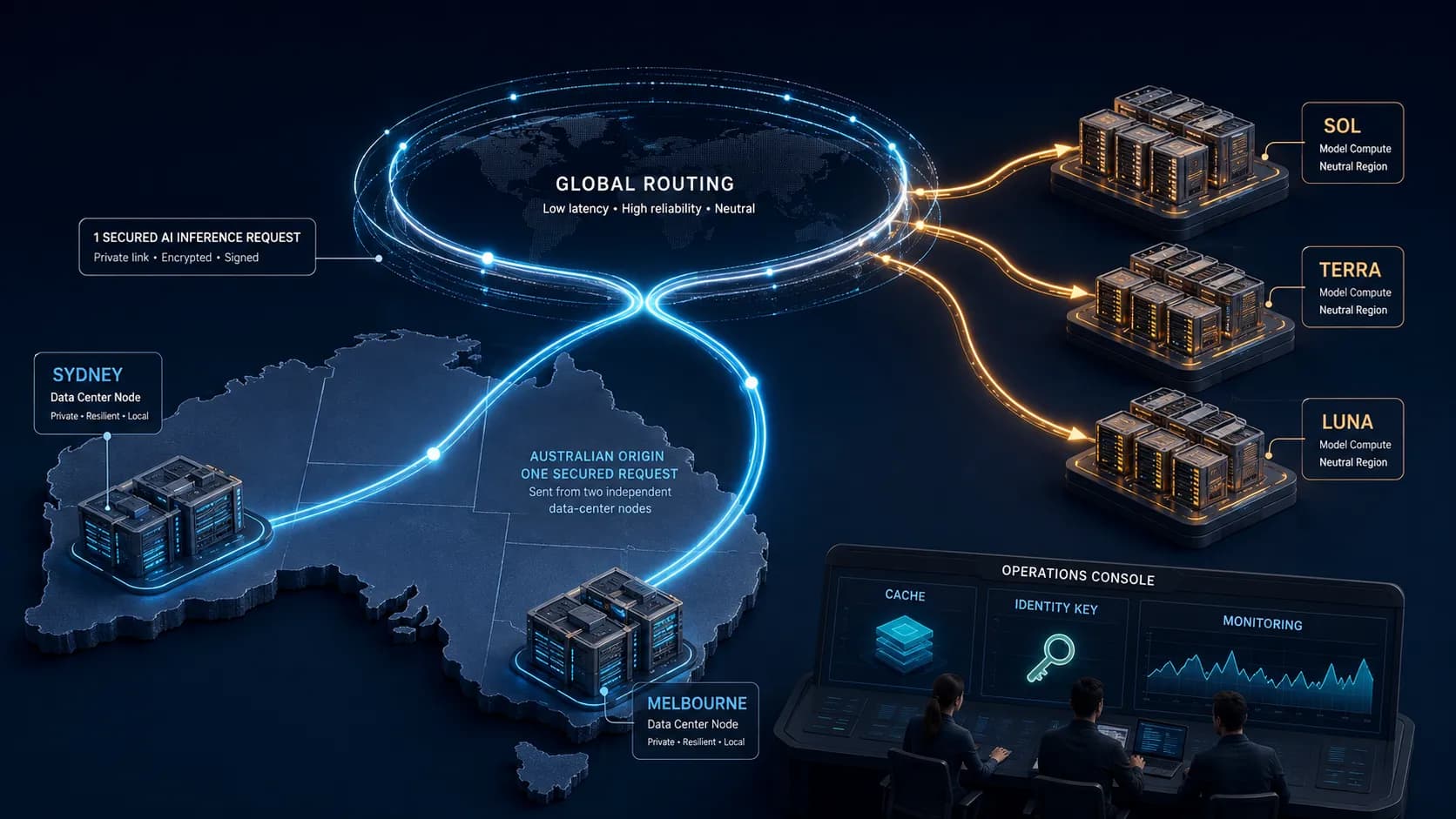
AWS says Australian teams can access OpenAI GPT-5.6 Sol, Terra, and Luna through Amazon Bedrock from the Sydney and Melbourne Regions using global cross-Region inference. Its guidance also covers prompt caching, OIDC-based Codex authentication, and CloudWatch monitoring, connecting model access to the controls needed for production.

Meta has introduced Muse Glimmer, a 30-billion-parameter open-weight model distilled from Muse Spark for on-device agentic workflows. The announcement establishes its direction, but not yet its hardware requirements, measured performance, licensing details, or production readiness.

Databricks highlights AI_Functions use cases in the data warehouse, while AWS presents a no-code workflow for prediction and BI. Both bring AI closer to governed data, but warehouse AI tasks and predictive-model lifecycles should not be conflated.

AWS's no-code workflow reduces code in preparation and training, but data, labels, and deployment decisions still require control. The productive framing is to treat visual tooling as an auditable operating layer.

AWS outlines a no-code workflow that carries Snowflake data through visual preparation, model training, and stakeholder dashboards. It is a practical pilot pattern for teams trying to shorten the path from operational data to decisions.

Databricks puts sub-second Feature Store freshness at the center of feature serving. The reminder for teams is that a low-code workflow only helps when inference features still match operational reality.

AWS combines SageMaker Canvas predictions with Quick Sight dashboards, natural-language questions, and AI-generated executive summaries. The opportunity is narrowing the gap between model output and the people who need to use it—not replacing analysis.