Quick summary
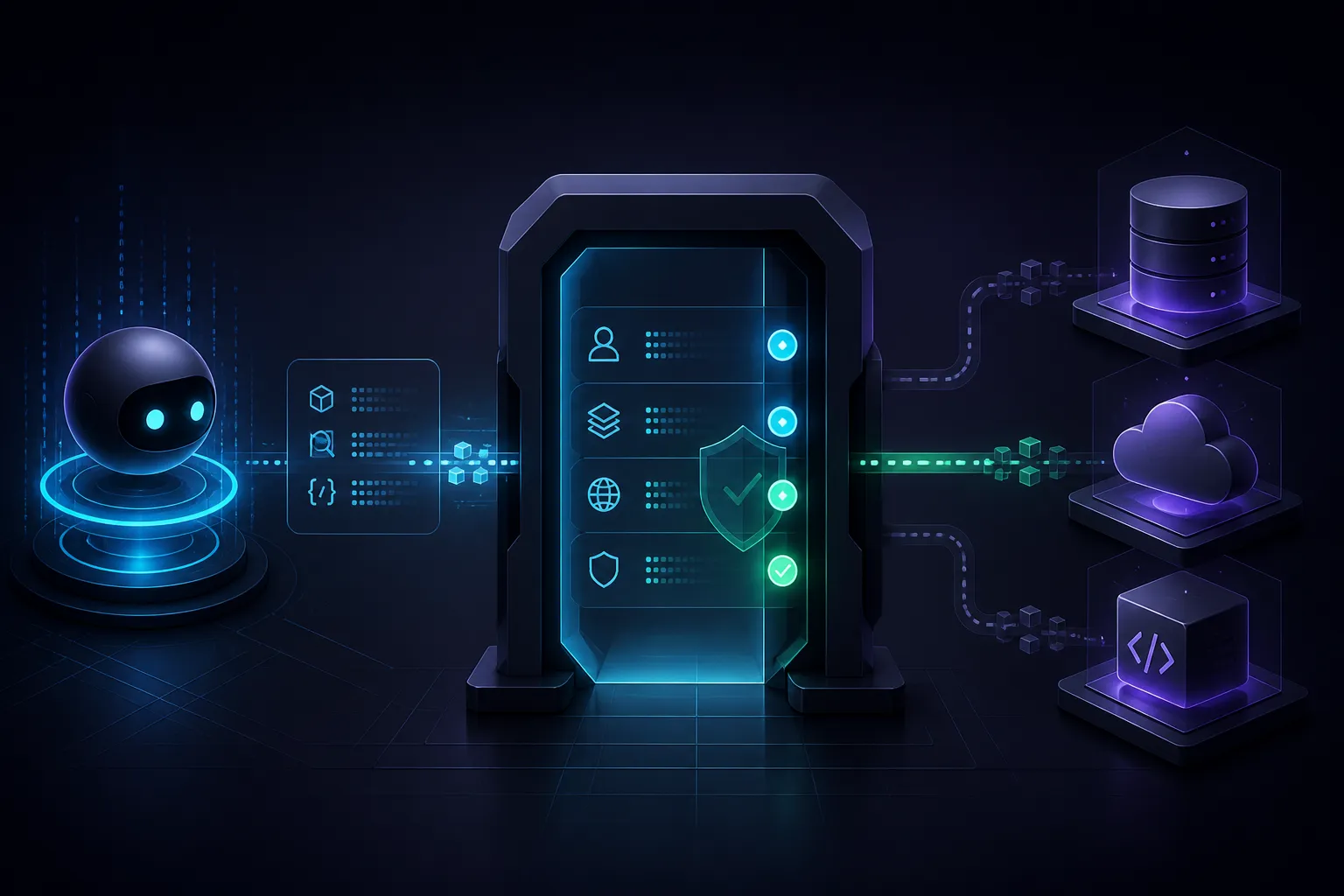
- Agent security starts with the authority a tool connection grants. A threat model should follow information and credentials into real actions, rather than assume a careful system prompt can enforce every boundary.
- A useful assistant becomes an operational actor when it can call tools. Separating evidence, credentials and consequential actions reduces the scope of mistakes and misuse.
- Inventory one agent's tools, caller identities and write permissions, then test whether untrusted input can cross those boundaries.
What happened
A document is evidence to read. A database credential is authority to act. An agent workflow becomes dangerous when it treats the first as permission to use the second.
MCP's tool specification describes how models invoke external capabilities and recommends human control over invocations. The protocol connection alone does not decide whether a particular employee should be able to perform a particular action.
Map the authority, not just the components
For each tool, record who supplied it, which identity it uses, what data it can read and which state it can change. A short inventory is more actionable than a diagram in which every system is labeled simply trusted.
A hypothetical support agent shows the difference. Reading a ticket, looking up an order and issuing a refund are separate authorities. A message inside a ticket should not be able to enlarge the refund tool's scope.
Three boundaries worth testing
| Boundary | Proposed control | Verification |
|---|---|---|
| External content to instructions | Keep retrieved text distinguishable from application policy | Submit a document containing conflicting instructions |
| Agent plan to tool authority | Enforce caller-scoped permissions outside the prompt | Repeat the request with a lower-privilege account |
| Tool request to irreversible action | Use bounded actions and review where consequences warrant it | Inspect exactly what the reviewer can approve |
These are defensive design suggestions, not guarantees that a single control eliminates prompt injection or misuse. Test both denied and permitted operations so restrictions do not silently break legitimate work.
Keep incident evidence distinct from product claims
Wiz's investigation overview reports agent-like activity in intrusions. Its SOC-agent announcement describes defensive products. The first informs a threat model; the second describes a vendor's proposed response. They are not independent proof that automation has solved the threat.
The immediate engineering task is to make authority inspectable. When a run goes wrong, the team should identify the input, caller, allowed tool scope and resulting state change. If those cannot be reconstructed, adding another agent to investigate the first may simply repeat the same trust problem.
Related reading
- JumpStart expands its catalog: choose models with workload tests
- SageMaker Studio shortens the first steps for new AWS accounts
- Claude on Bedrock adds structured outputs: keep business validation
Sources
- CyberStrikeAI in the wild: the use of AI in real-world attacks on organizations
- From Reactive to Proactive: Empowering SOC Teams with the Wiz Red and Blue Agents
- The Rise of Agentic Attacks: What They Look Like, and Where They're Headed
- Secure Your AI Agents – Free Model Context Protocol (MCP) Security Course
- Learn Model Context Protocol (MCP) Security
Why developers should care
A useful assistant becomes an operational actor when it can call tools. Separating evidence, credentials and consequential actions reduces the scope of mistakes and misuse.
Recommended action
- 1Inventory one agent's tools, caller identities and write permissions, then test whether untrusted input can cross those boundaries.