Quick summary
- Discussion of five MCP roadmap focus areas suggests an ecosystem working on platform concerns. For engineering teams, its value is not feature prediction but identifying assumptions that must remain flexible.
- MCP architecture choices can create expensive migration work if they are tightly coupled to details that are not yet stable.
- Create an MCP assumptions register for the current architecture and flag every point that needs an adapter or upgrade test.
What happened
A protocol’s maturity is not measured only by the number of demos around it. It is also reflected in the priorities its community discusses in public.
GeekNews carries a discussion of a new MCP roadmap with five areas of focus. The supplied material does not detail those areas, so the headline should not be turned into an invented feature list. The roadmap’s existence is still meaningful: MCP is being considered as a platform with longer-term direction.
A roadmap is not an implementation commitment
A roadmap can reveal priorities; it is not a promise of an API, a release date, or compatibility behavior. Teams should not embed an unverified future assumption in their architecture merely because it appears in community discussion.
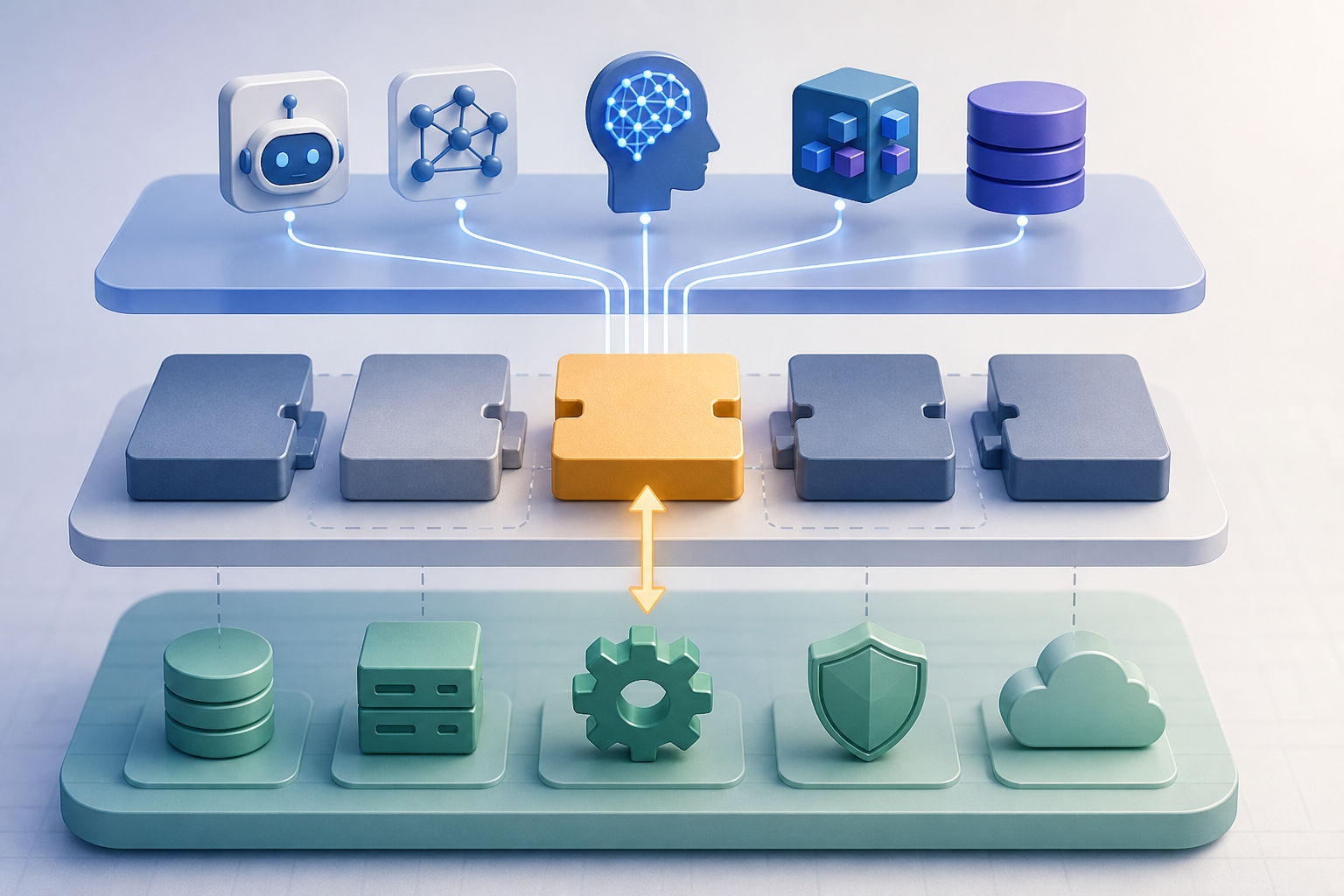
Use it to ask better questions instead: which dependencies are provisional, which interfaces may move, and where should an adapter sit?
Design for controlled change
Separating business logic from the specific MCP layer is a risk-reduction investment. Tool handlers should call services through clear internal interfaces rather than allowing transport or schema decisions to spread through the application.
- Place MCP clients and servers behind internal interfaces.
- Version configurations and tool contracts you control.
- Document assumptions about hosts, transports, and permissions.
- Plan upgrade testing before expanding the user population.
Do not ignore operating signals
A roadmap is only one input. Discussion of hard-to-see stdio failures and MCP traffic detection indicates that operability and governance are becoming practical concerns too.
An MCP assessment should therefore cover both protocol evolution and your ability to debug, observe, and control it in your own environment.
Monitor with intent
Assign a person or team to track relevant changes, then turn findings into a concrete choice: keep, sandbox, or plan a migration. Do not convert every roadmap signal into a new implementation project.
In 5 Minutes
- A roadmap is a directional signal, not a feature commitment.
- The supplied item confirms five focus areas but does not name them.
- Adapters and documented assumptions reduce change costs.
- MCP evaluation includes operability and governance, not protocol direction alone.
Sources
Why developers should care
MCP architecture choices can create expensive migration work if they are tightly coupled to details that are not yet stable.
Recommended action
- 1Create an MCP assumptions register for the current architecture and flag every point that needs an adapter or upgrade test.