Quick summary
- Anthropic has opened a research preview of the Model Hardware Standard to an initial group of scientific labs and advanced manufacturers. The proposal aims to give AI agents a shared specification for safely operating physical devices, although its technical design and governance remain to be established publicly.
- Software failures become physical risks when agents can operate laboratory or manufacturing equipment. A shared standard could simplify integrations, but its value will depend on enforceable permissions, reliable device state, auditability and safe failure behavior.
- Monitor the release of the MHS specification and participation details. Meanwhile, document every hardware action, permission boundary, approval requirement and safe-stop path in your existing environment.
What happened
Anthropic is previewing the Model Hardware Standard, or MHS, as a shared specification for AI agents that operate physical devices. The research preview is initially being opened to scientific research labs and advanced manufacturers.
The announcement is notable because physical actions change the risk profile of an agent system. A malformed API call may corrupt data or fail a workflow; an inappropriate hardware command can affect equipment, materials or a process that cannot be restored with a simple retry.
What has Anthropic actually announced?
In its Model Hardware Standard research preview announcement, Anthropic describes MHS as a shared specification intended to help AI agents operate physical devices safely. Access is beginning with a first group of scientific research laboratories and advanced manufacturers.
The supplied announcement establishes the objective, preview status and initial audience. It does not provide enough evidence to characterize the protocol architecture, transport, command schema, permission system, supported equipment or broader release plan.
MHS should therefore be treated as an early standardization effort rather than a production-ready interface. The preview appears designed to test the idea in settings where specialized equipment and operational safety make direct experimentation consequential.
Why does physical control need a stronger boundary?
Agent tool use already requires authentication, authorization and limits on side effects. Hardware adds state that may be only partially observable, actions whose timing matters, and outcomes that may not be reversible.
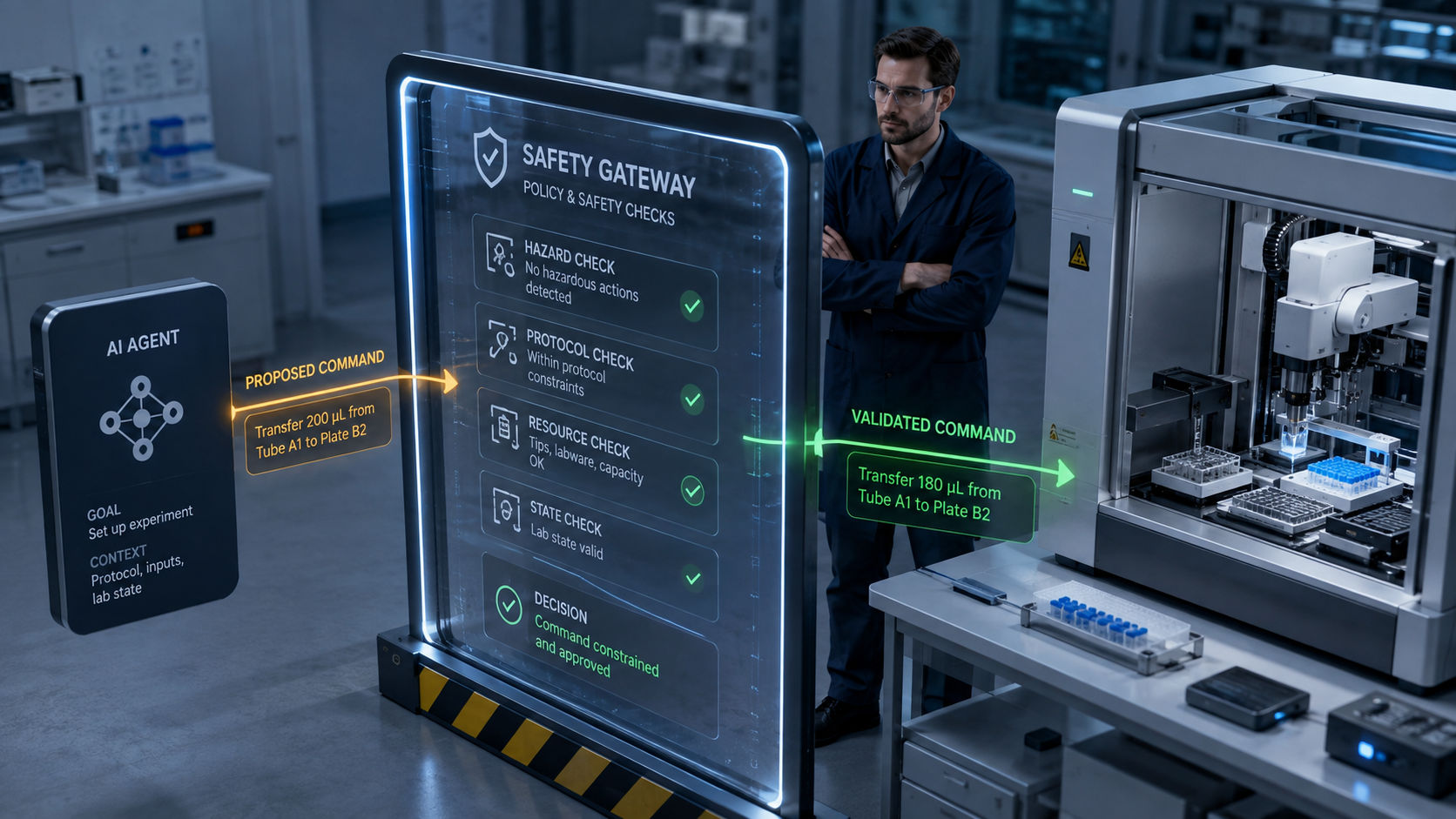
The core engineering boundary sits between a model proposing an action and a controller accepting it. That distinction matters in other high-impact workflows too: as seen with agents capable of conducting transactions, adding capability without enforceable scope creates a control problem rather than merely an integration problem.
A common specification could reduce bespoke connections between individual agents and device families. It could also make integrations easier to inspect if implementations use consistent concepts. Neither benefit is automatic, however: interoperability can scale unsafe commands just as readily as safe ones if policy enforcement is left undefined.
What should developers look for in the specification?
The following points are evaluation criteria, not confirmed MHS features. They identify the technical evidence developers, platform teams and security reviewers should seek as more material becomes available.
| Area | Question the standard should help answer |
|---|---|
| Capabilities | How does an agent discover supported actions, operating limits and required preconditions? |
| Identity and authorization | Which principal can request an action, on which device, for how long and within what scope? |
| State | How is freshness represented, and what happens when reported and physical state differ? |
| Failure handling | Which errors permit a retry, and which require a safe stop or human intervention? |
| Auditability | Can operators correlate model intent, approval, command delivery, device response and outcome? |
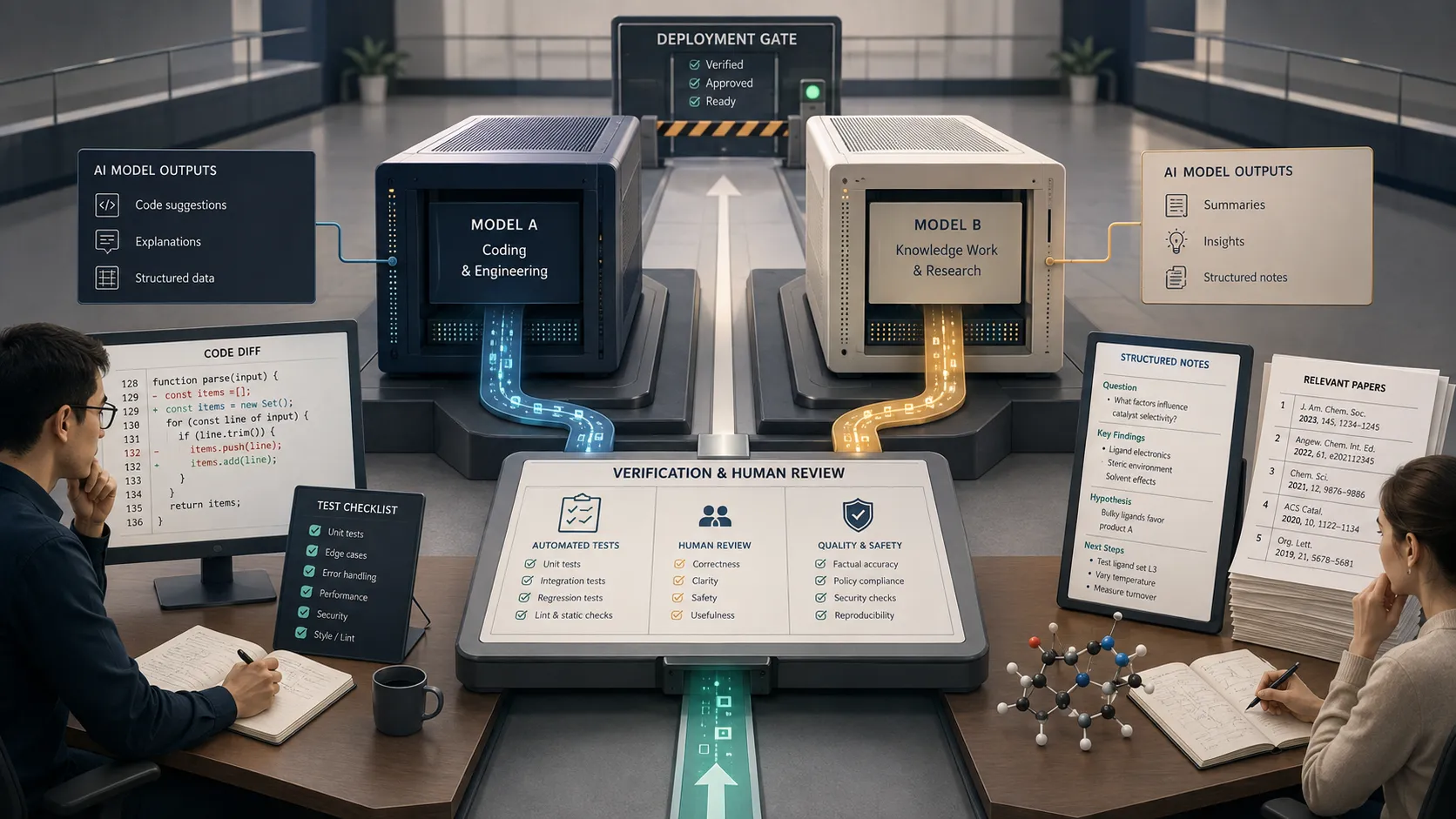
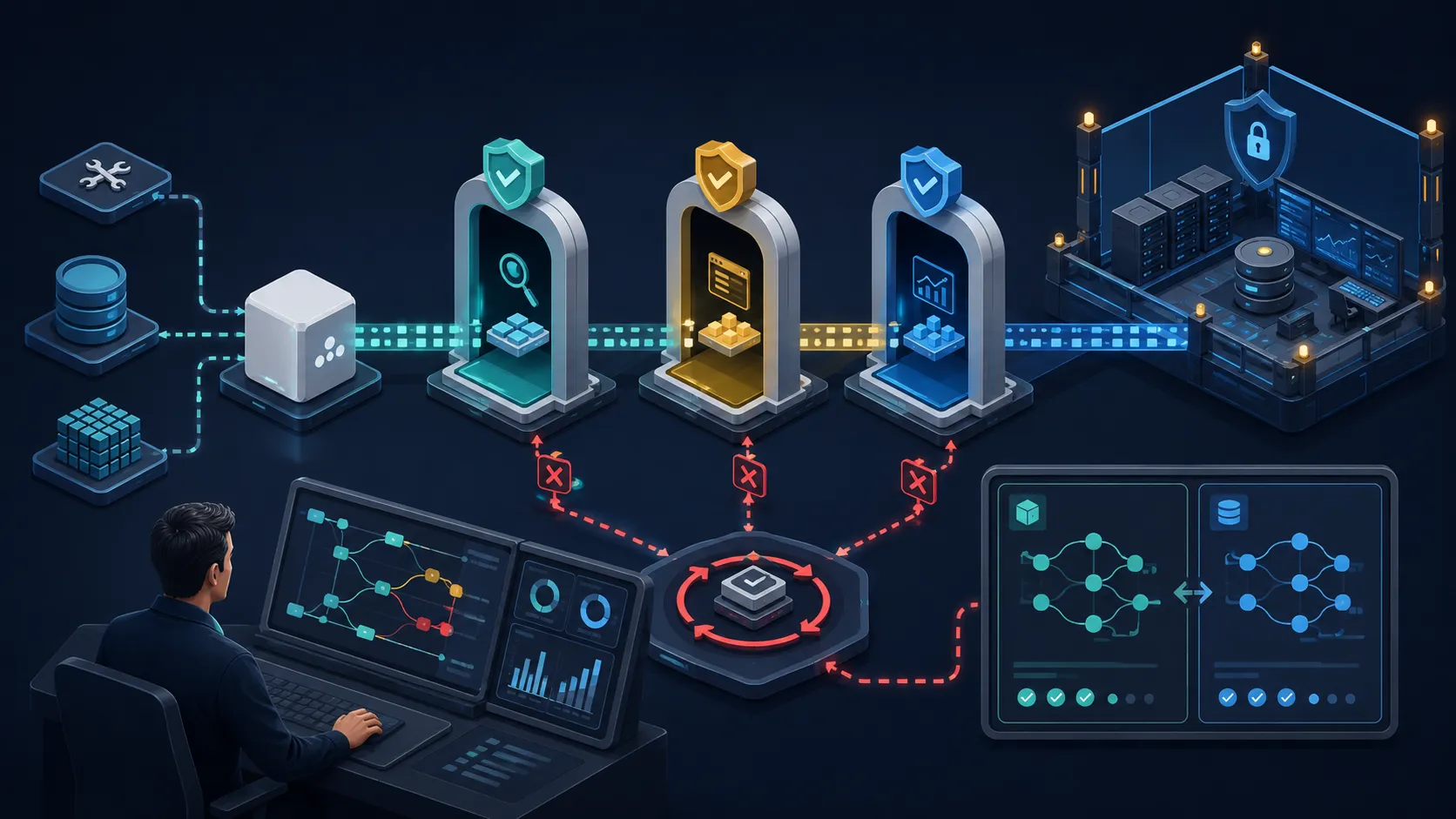
These controls should not depend solely on a prompt or the model following instructions. Deterministic validation, authorization policy and emergency behavior belong in systems outside the model. This reflects a broader shift in agent engineering toward evaluation and production controls.
Compatibility will be another test. A useful shared standard needs a way to determine whether independent implementations behave consistently, especially around errors and boundary conditions. The announcement supplied here does not say how MHS will be governed or tested, so those remain open questions rather than shortcomings that can yet be confirmed.
How should engineering teams prepare?
Teams do not need to design against an unpublished architecture. They can instead inventory current devices, control protocols, operational owners, safety zones and the actions that require explicit human approval.
A sensible reference boundary separates three responsibilities: the agent proposes an action, a policy layer decides whether it is permitted, and a device controller executes only within validated limits. This preserves defense in depth even if a common specification eventually makes the lower-level interface easier to adopt.
Testing should start with simulation or non-critical equipment before safety-, quality- or production-sensitive systems. Useful scenarios include duplicate commands, stale state, delayed responses, lost connectivity, out-of-scope requests, interrupted operations and human takeover.
Developers should also watch whether MHS becomes implementable by multiple hardware and software vendors rather than remaining tied to a narrow integration path. Governance, extension mechanisms, conformance testing and the representation of device-specific safety constraints will determine whether it can become meaningful infrastructure.
Conclusion
- MHS is a limited research preview, not a proven production standard.
- Its potential value is a common boundary between AI agents and physical devices.
- Interoperability must be paired with authorization, state validation, audit trails and safe failure behavior.
- Teams can prepare now by documenting control boundaries and building hardware-specific threat models.
Related reading
- AI Agents Can Now Transact—Control Is the Hard Part
- AI agent engineering shifts toward evaluation and production controls
- AI infrastructure attracts capital as server costs rise
Source
Why developers should care
Software failures become physical risks when agents can operate laboratory or manufacturing equipment. A shared standard could simplify integrations, but its value will depend on enforceable permissions, reliable device state, auditability and safe failure behavior.
Recommended action
- 1Monitor the release of the MHS specification and participation details. Meanwhile, document every hardware action, permission boundary, approval requirement and safe-stop path in your existing environment.