Quick summary
- Recent LangSmith updates point to a broader shift in AI agent engineering: model selection is giving way to evaluation, issue detection, pre-release testing, and operational control. Task environments, agent harnesses, and correctable memory are also becoming part of the production stack.
- An agent’s reliability depends on the system around its model. Engineering teams need ways to measure behavior, isolate changes, govern state, and turn production failures into repeatable tests.
- Choose one bounded agent workflow, build a regression suite from real failures, and trial preview testing, evaluators, and production tracing before expanding deployment.
What happened
Choosing a stronger model is no longer a complete strategy for putting AI agents into production. A cluster of LangSmith updates instead emphasizes the less visible engineering layer around the model: behavioral evaluation, controlled previews, issue detection, and state management.
These announcements do not prove that agent reliability has been solved. They do indicate that the field is moving beyond prompt-driven demonstrations toward systems whose changes and failures can be measured before deployment and monitored afterward.
What is changing in the agent toolchain?
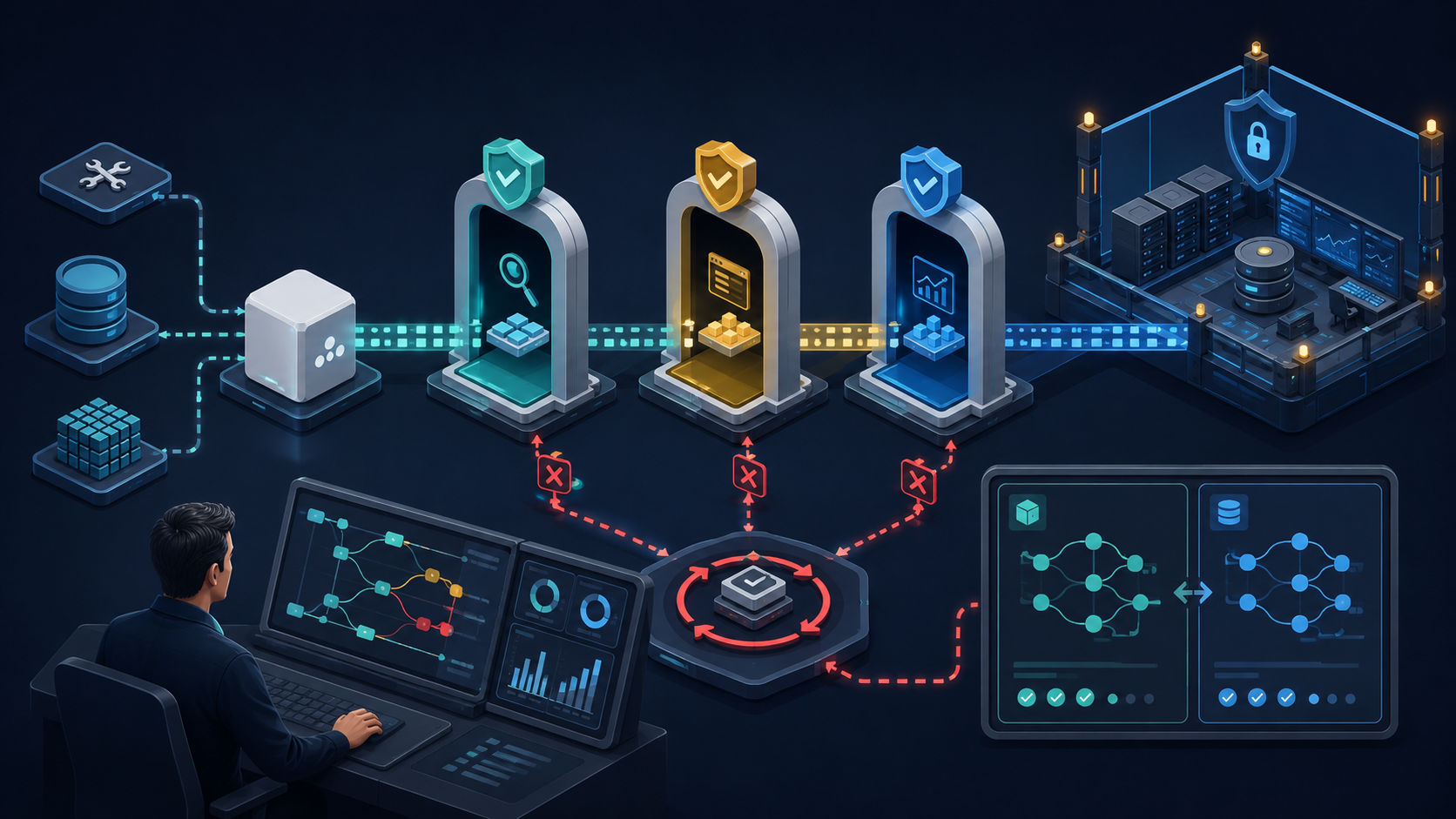
LangChain has introduced capabilities aimed at distinct stages of an agent’s lifecycle. LangSmith Preview Builds are intended to test agent changes before production, establishing a clearer boundary between an experiment and the version serving users.
For behavioral assessment, Tuned Evaluators begin with Perceived Error, an attempt to identify problems closer to how a user experiences them rather than relying only on fixed output checks. LangChain separately claims that its LangSmith Engine delivers more than twice the issue detection. That is a vendor-reported result, not an independent benchmark that can be assumed to hold across workloads.
A company case study describes Toyota North America using deep agents and LangSmith for enterprise AI. The supplied public evidence is not sufficient to generalize its outcomes, but the case signals how observability and evaluation are being positioned as deployment infrastructure rather than development-only debugging aids.
Why is the model no longer the only engineering unit?
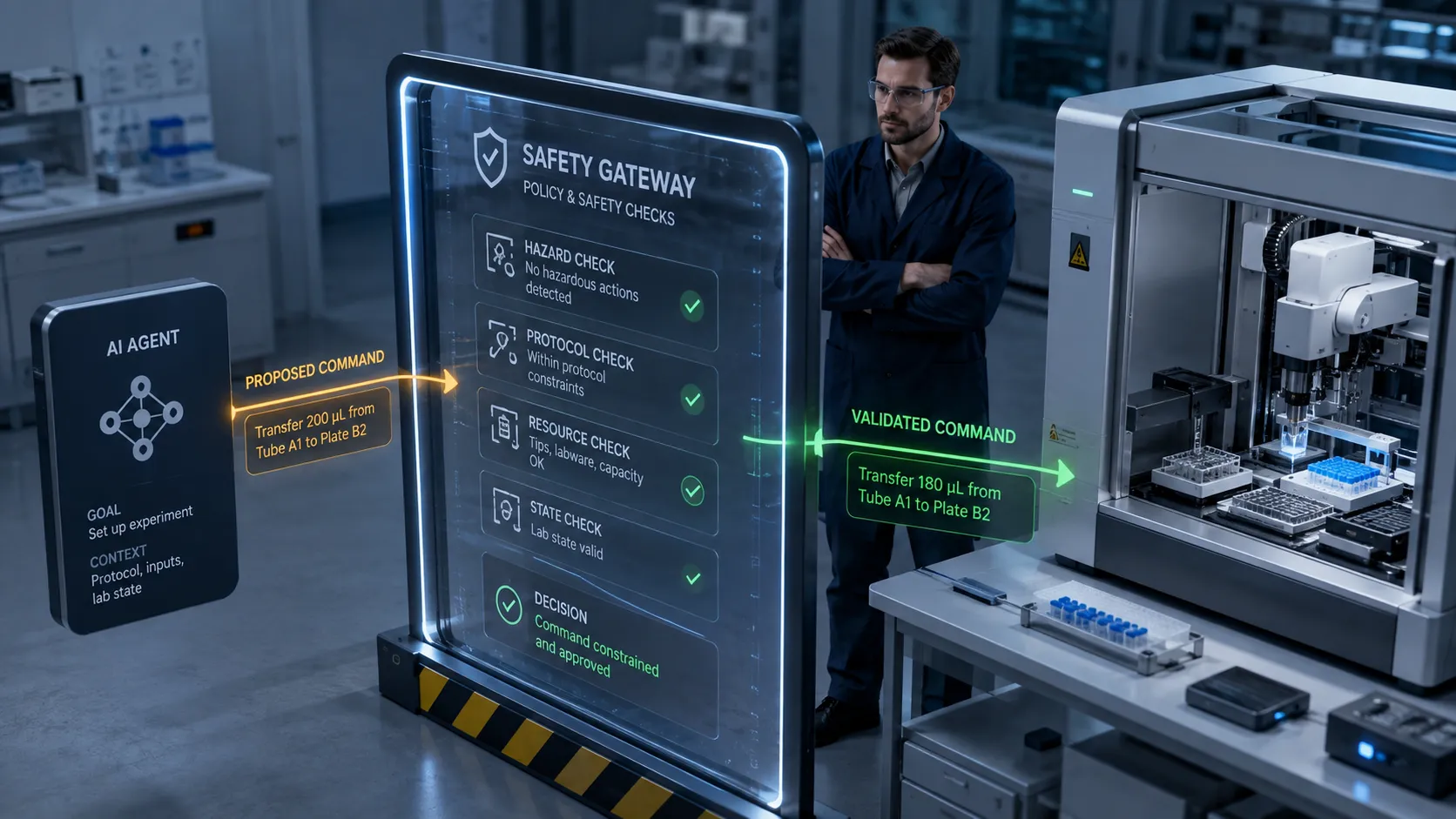
An agent does more than produce one response. It receives state, selects tools, performs multiple steps, observes results, and may write information into memory. A failure can therefore originate in prompts, data, permissions, task environments, orchestration logic, or stale state without being a model failure.
An agent harness is the surrounding execution layer: instructions, tools, loops, limits, error handling, and observability. Secondary coverage discussing the importance of the harness argues that this layer is becoming a key differentiator. That framing is useful, but teams still need to validate it against their own tasks and operational constraints.
Evaluation environments matter for the same reason. LangChain has outlined how it builds agent environments and tasks, highlighting the role of the context in which an agent is allowed to act. An oversimplified test environment can produce reassuring scores while failing to represent production permissions, state, or tool behavior.
What should an agent control plane measure?
A practical quality system separates controls into several layers. The following is an architectural recommendation, not a claim that one product automatically covers every concern.
| Control layer | Question to answer | Evidence to retain |
|---|---|---|
| Change | How does the candidate differ from production? | Prompts, configuration, model, tools, and test set |
| Behavior | Did the agent complete the intended task? | Outcome, tool path, perceived errors, and task criteria |
| Runtime | Which failures appear only under live traffic? | Traces, exceptions, user feedback, and anomalous cases |
| State | Is memory accumulating incorrect or stale information? | Provenance, memory changes, and verification results |
Memory should be treated as inspectable state, not an automatically trustworthy knowledge store. The work on self-correcting memory in OpenWiki presents a direction in which retained knowledge can be reviewed and amended. The operational question is not merely how much an agent remembers, but how incorrect memory is detected, traced, and repaired.
This control-plane view resembles established infrastructure practice: management and policy are separated from the workloads they govern. Teams designing tool-rich agent systems can draw useful parallels from governed control-plane design, while recognizing that agents introduce different evaluation and state challenges.
How should teams adopt these practices?
Do not begin by purchasing tooling and deciding later what to measure. Select a valuable but bounded agent workflow, collect known failures, and turn them into repeatable tasks. Each task should define its starting conditions, available tools, and success criteria clearly enough to compare candidate versions.
- Establish a baseline: retain outputs, traces, and failures from the current version on a representative task set.
- Isolate changes: preview prompt, model, tool, or memory modifications before exposing them to users.
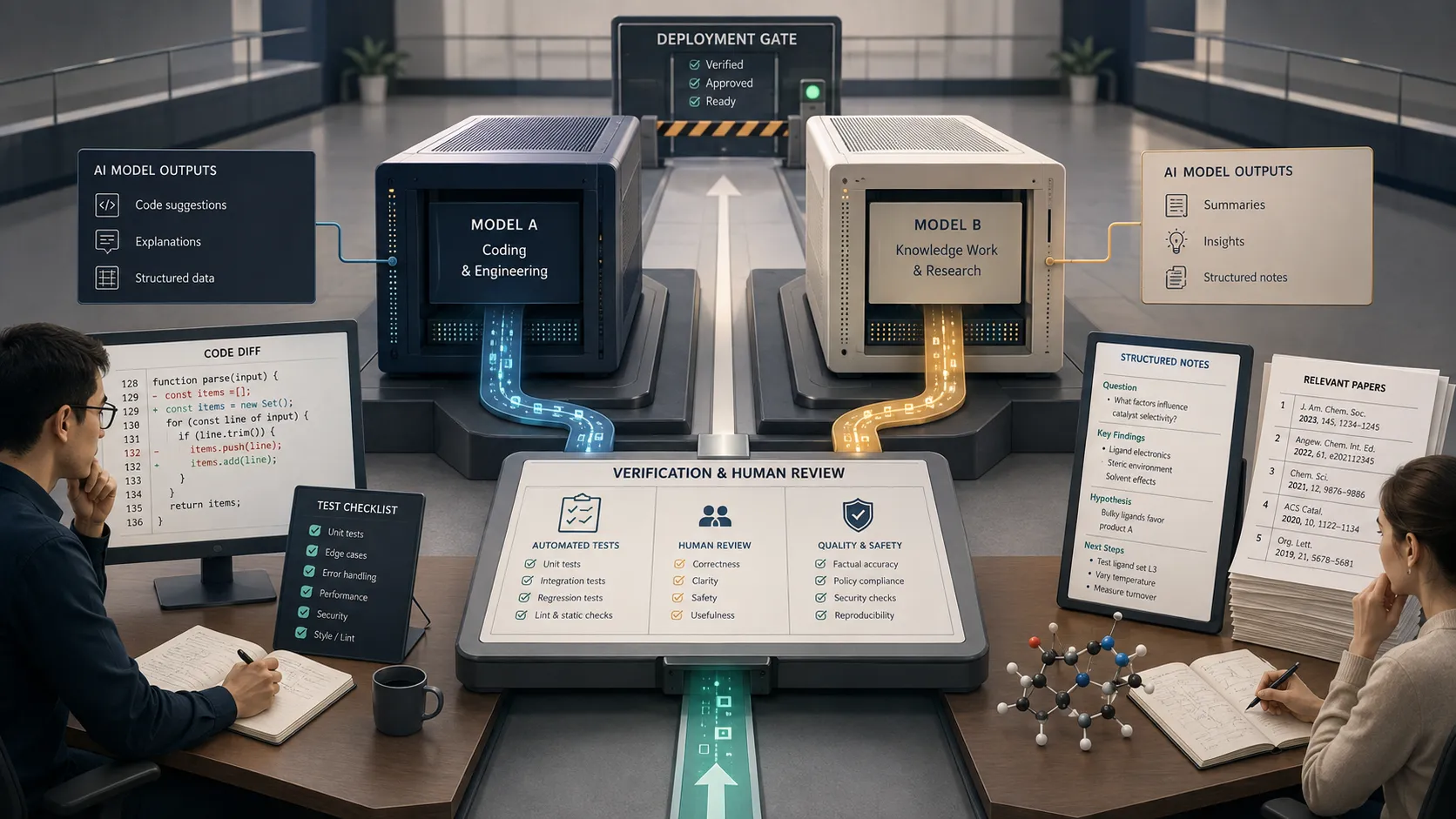
- Combine evaluation methods: use deterministic checks where possible, evaluators for criteria that resist simple coding, and human review for high-risk cases.
- Close the feedback loop: add confirmed production incidents to the regression set and preserve memory provenance.
- Set release gates: expand deployment only when quality, cost, and failure behavior satisfy agreed thresholds.
Teams orchestrating multiple tools or agents should also evaluate permissions and handoffs, not just generated text. A product workflow built around MCP-connected AI roles, for example, increases the value of traces, explicit responsibility boundaries, and integration tests.
Watch whether reported issue-detection gains are reproduced across varied data, whether tuned evaluators remain stable across domains, and whether preview builds adequately represent production conditions. Those questions provide a stronger adoption test than feature counts or the quality of a controlled demonstration.
Conclusion
- AI agent engineering is shifting from model selection to lifecycle control.
- Preview testing, evaluation, and runtime monitoring address different failure classes.
- Harnesses, task environments, and memory need independent testing.
- Teams should assess new tooling against their own incidents and regression tasks.
Related reading
- Ventura React: Is this lightweight component library still fit for new projects?
- Nova MCP turns Cursor and Claude into a product-building team
- Ansible Automation Orchestrator: Designing a Governed Control Plane
Sources
- How Toyota North America Put Enterprise AI on the Balance Sheet with Deep Agents and LangSmith
- New in LangSmith Engine: >2x better issue detection
- How We Build Agent Environments & Tasks
- Building Self-Correcting Memory in OpenWiki
- Introducing LangSmith Tuned Evaluators, starting with Perceived Error
- LangSmith Preview Builds: Test agent changes before production
- Nvidia just showed that the harness, not the AI model, is now the real hero
Why developers should care
An agent’s reliability depends on the system around its model. Engineering teams need ways to measure behavior, isolate changes, govern state, and turn production failures into repeatable tests.
Recommended action
- 1Choose one bounded agent workflow, build a regression suite from real failures, and trial preview testing, evaluators, and production tracing before expanding deployment.