Quick summary
- Developments around LangChain, Nevermined, and Binance are moving AI agents from recommending actions to purchasing services or placing trades. For developers, the difficult problem is not connecting a payment API but constraining authority, limiting losses, and preserving an audit trail.
- Once an agent can spend money or trade assets, a bad decision can produce a real financial consequence. Payments must therefore be treated as a privileged capability rather than another routine tool call.
- Build a recommendation-only or sandbox proof of concept, then threat-model authorization, approval, execution, revocation, and audit paths before exposing an agent to live funds.
What happened
AI agents are approaching a consequential boundary: they can move beyond finding information and invoking reversible tools to initiating transactions with financial effects. New LangChain material describes agents buying and selling services, while Binance is allowing agents to participate in trading.
This shifts the engineering problem from workflow automation to governing software with economic authority. A flawed prompt, misused tool, or weak policy can now lead to unwanted spending or a live market position rather than merely an incorrect answer.
What changes when an agent can pay?
In a conventional agent loop, a model selects a tool, supplies arguments, observes the result, and decides what to do next. Payments introduce a step that may be expensive or difficult to reverse: an agent can exchange value to acquire data, consume a paid service, sell an output, or act on a user's behalf.
LangChain's coverage of Nevermined and paying agents focuses on agents buying and selling services. A separate post presents an approach to secure transactions for LangChain agents. The supplied evidence establishes this direction, but it does not justify assuming that every integration shares the same authorization, settlement, or dispute-handling model.
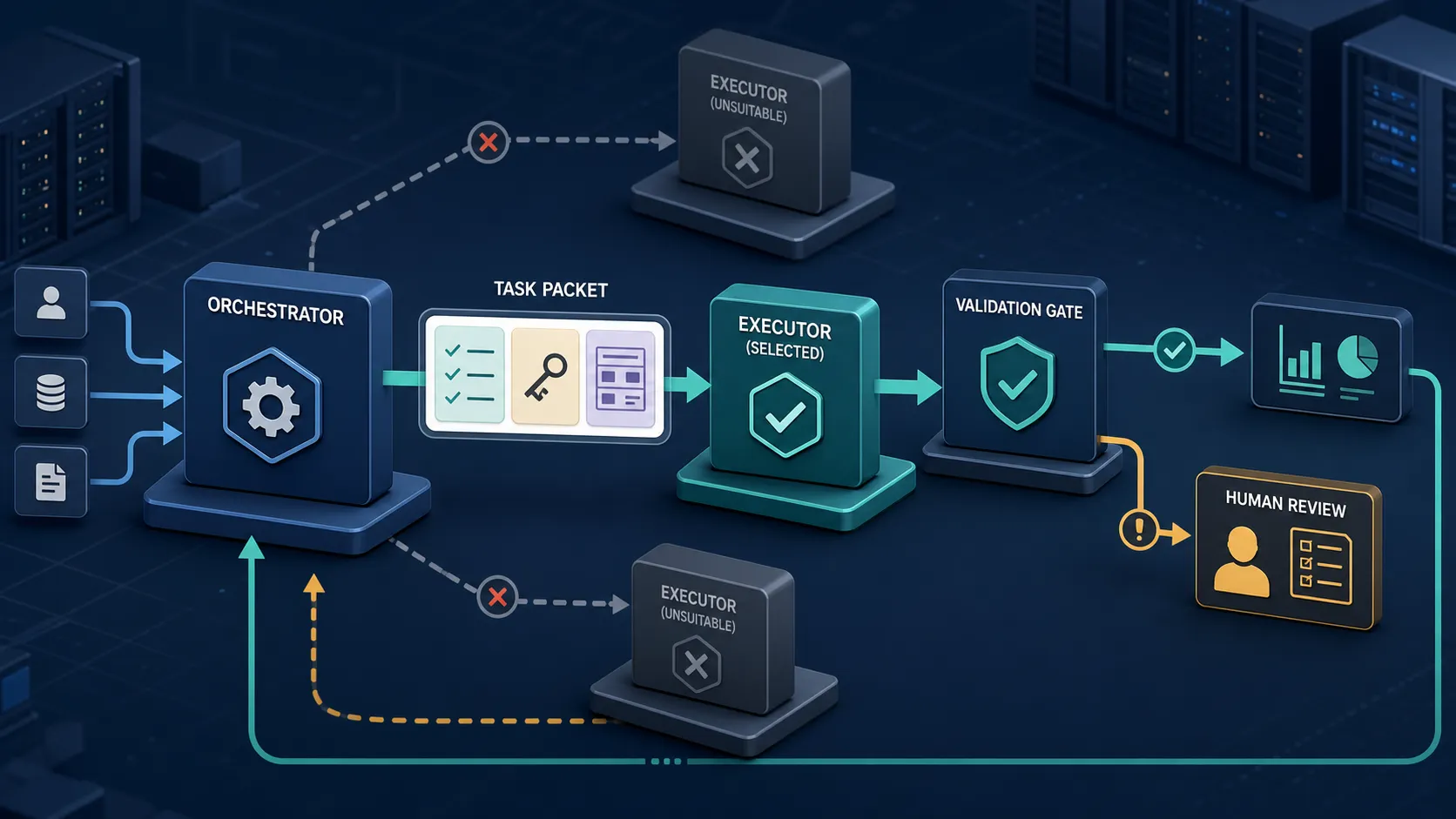
Architecturally, payment should be a separate capability rather than an implicit extension of tool use. The agent may plan and propose a purchase, but an independent execution layer should validate identity, policy, amount, counterparty, and approval state before committing it.
Which controls belong between intent and execution?
The first control is a tightly scoped grant. Instead of giving an agent an unrestricted credential, teams should constrain permitted operations, approved services, budgets, frequency, and expiration. These are design recommendations, not claims about the default safeguards of the products covered by the sources.
The second is pre-execution enforcement. Deterministic rules, risk checks, and human approval for thresholds chosen by the organization can stand between a model's proposal and the final command. The component that plans a transaction should not also hold credentials, approve itself, and submit every order without another boundary.
The third is traceability. Logs should connect the original request, policy version, agent decision, tool invocation, validation result, and transaction receipt. This resembles the broader discipline of designing a governed automation control plane: separate automated intent from policy enforcement and execution.
- Least privilege: authorize only the transaction types needed for the task.
- Loss limits: cap exposure per operation, session, and time window.
- Risk-based approval: escalate unusual or hard-to-reverse actions to a person.
- Emergency revocation: stop access without waiting for a prompt change or agent redeployment.
Binance highlights where responsibility can land
According to TechCrunch's reporting on AI agents trading through Binance, the platform permits agent trading while much of the responsibility for keeping those agents under control remains with users. That distinction matters: an API accepting an order does not make the surrounding autonomous system safe.
In asset trading, a wrong output is not simply a poor response. An agent might misunderstand an objective, operate on incomplete inputs, repeat an action, or continue after the assumptions behind a plan have changed. Successfully calling an API proves neither that the strategy is sound nor that the risk and access configuration are appropriate.
Technical founders should also separate model risk from system risk. A model may choose an unsuitable action; inadequate limits, duplicate protection, state validation, or reconciliation can amplify the impact. A handful of successful conversational tests therefore provides little assurance for a production transaction loop.
How should teams evaluate transacting agents?
The sensible near-term posture is a constrained assessment, not unrestricted financial autonomy. Begin in recommendation-only mode: the agent prepares an intended purchase or order, while a person or an independent policy service decides whether execution is allowed.
Next, test in an isolated environment with a separate account and a deliberately small organization-defined budget. Test cases should include ambiguous prompts, conflicting instructions, delayed tool responses, duplicated requests, data changing between planning and execution, and revoked credentials.
When an agent coordinates multiple tools or specialized roles, orchestration patterns such as those discussed in the Nova MCP product-team workflow can help structure the process. Financial operations add another trust boundary, however: a planning agent should not automatically become the universal signer and executor.
Before expanding access, measure blocked operations, intervention frequency, recovery behavior, and audit completeness. Success is not merely completing more tasks. A safe system must also reject actions at the right time and make it possible to reconstruct why a transaction occurred.
Conclusion
- Transacting agents make agentic commerce possible, but introduce direct financial consequences.
- Payment authority should be isolated from planning and governed by an independent policy layer.
- Least privilege, exposure limits, approval gates, revocation, and audit logs are foundational controls.
- Teams should start with recommendation-only or sandbox trials before considering live funds.
Related reading
- Ventura React: Is this lightweight component library still fit for new projects?
- Nova MCP turns Cursor and Claude into a product-building team
- Ansible Automation Orchestrator: Designing a Governed Control Plane
Sources
Why developers should care
Once an agent can spend money or trade assets, a bad decision can produce a real financial consequence. Payments must therefore be treated as a privileged capability rather than another routine tool call.
Recommended action
- 1Build a recommendation-only or sandbox proof of concept, then threat-model authorization, approval, execution, revocation, and audit paths before exposing an agent to live funds.