Quick summary
- Pulumi is expanding support for existing Terraform estates while separately examining Terraform’s strengths and pressure points with Kubernetes. Teams should use interoperability to clarify infrastructure and workload boundaries, not assume every layer needs the same migration.
- Kubernetes complicates IaC because cloud foundations and rapidly changing application resources have different lifecycles. Clear ownership boundaries help prevent an unnecessarily broad transition project.
- Map your current boundary between platform provisioning and Kubernetes workloads, then trial one stable Terraform module and one small workload scope separately.
What happened
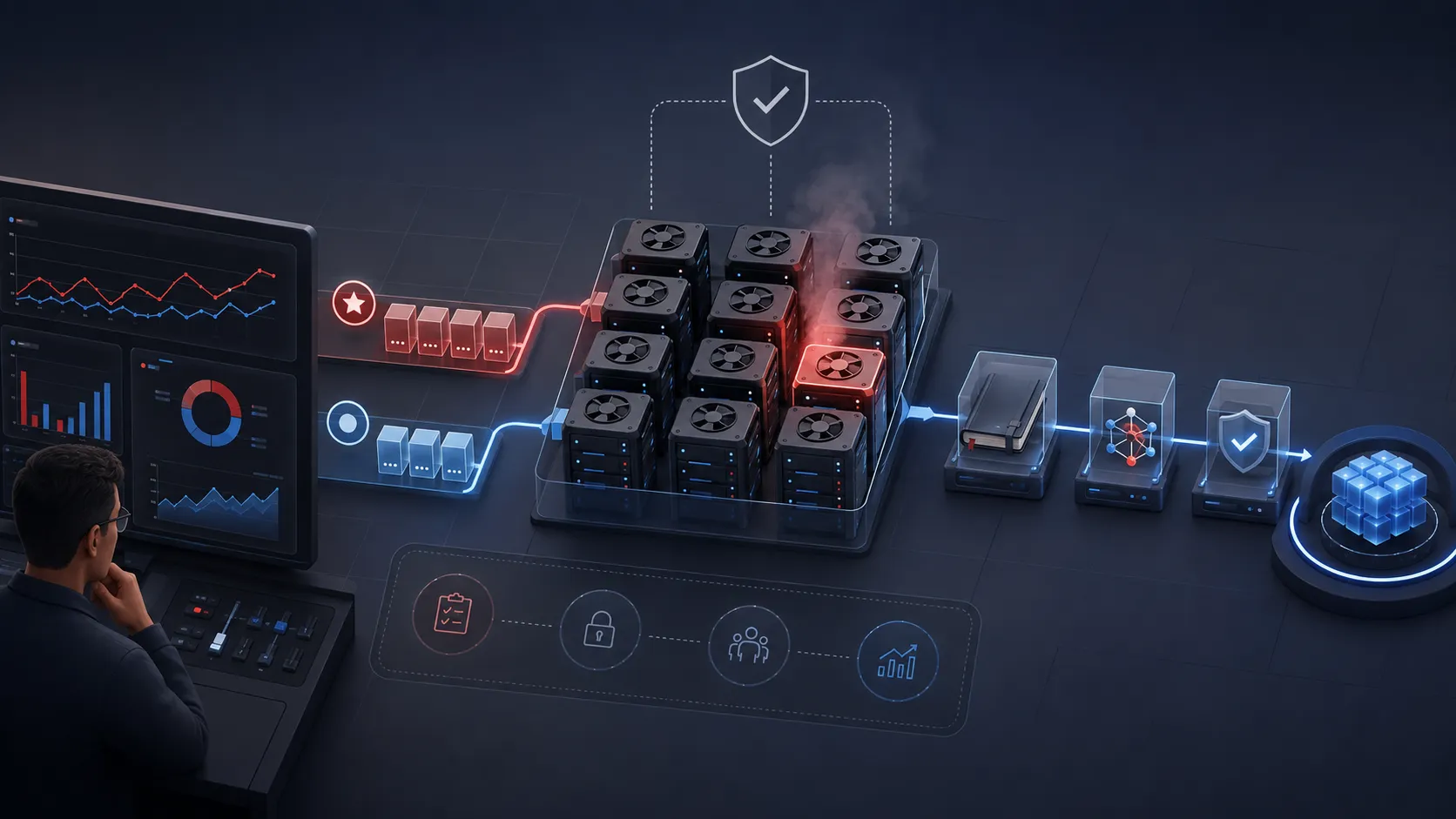
Kubernetes often exposes the limits of a “one tool for everything” IaC decision. Cloud foundations may change relatively slowly, while cluster and application resources evolve at another cadence. As Pulumi deepens Terraform and OpenTofu interoperability, teams can revisit that boundary without first rewriting their estate.
In its Terraform and Kubernetes guide, Pulumi discusses where Terraform’s Kubernetes provider works well, where it comes under strain, and how Pulumi compares. It does not replace an architecture review, but it frames the right questions.
Interoperability does not mean merging every layer
HCL support, Terraform state handling, hosted modules, and remote execution provide a path to continue operating existing Terraform assets in the Pulumi ecosystem. Pulumi says HCL in Pulumi IaC and Pulumi Cloud as a Terraform backend are GA.

That does not require every Kubernetes manifest, cluster component, or cloud primitive to move through one migration. An intentional boundary is typically easier to test and reverse.
Architecture questions to answer first
- Which resources provision platform foundations, and which belong to workload lifecycle?
- Are current Terraform modules stable interfaces for network, cluster, or identity?
- Which changes need a state-centric workflow, and which are tightly coupled to application delivery?
- Who owns recovery when cloud and Kubernetes changes fail together?
A practical pilot shape
Keep a proven Terraform foundation module and use it as the interoperability checkpoint. In parallel, select a small Kubernetes scope to assess a Pulumi workflow on its own criteria. Results in one layer should not be projected onto the other.
Pulumi’s hands-on tour connects state, modules, HCL, and remote execution; those are the axes to test for the Terraform portion. For Kubernetes, add criteria that reflect application release practices and ownership.
What to observe
Watch for plans that become hard to explain, state processes that become bottlenecks, and handoffs that slow platform or application teams. Those signals are more useful than trying to select a universally best tool through one proof of concept.
In 5 Minutes
- Kubernetes makes the boundary between cloud foundations and workloads important.
- Pulumi enables interoperability assessment without an immediate Terraform rewrite.
- Do not extrapolate an infrastructure pilot to application lifecycle management.
- Use ownership, state, and release workflows to define technical boundaries.
Sources
Why developers should care
Kubernetes complicates IaC because cloud foundations and rapidly changing application resources have different lifecycles. Clear ownership boundaries help prevent an unnecessarily broad transition project.
Recommended action
- 1Map your current boundary between platform provisioning and Kubernetes workloads, then trial one stable Terraform module and one small workload scope separately.