Quick summary
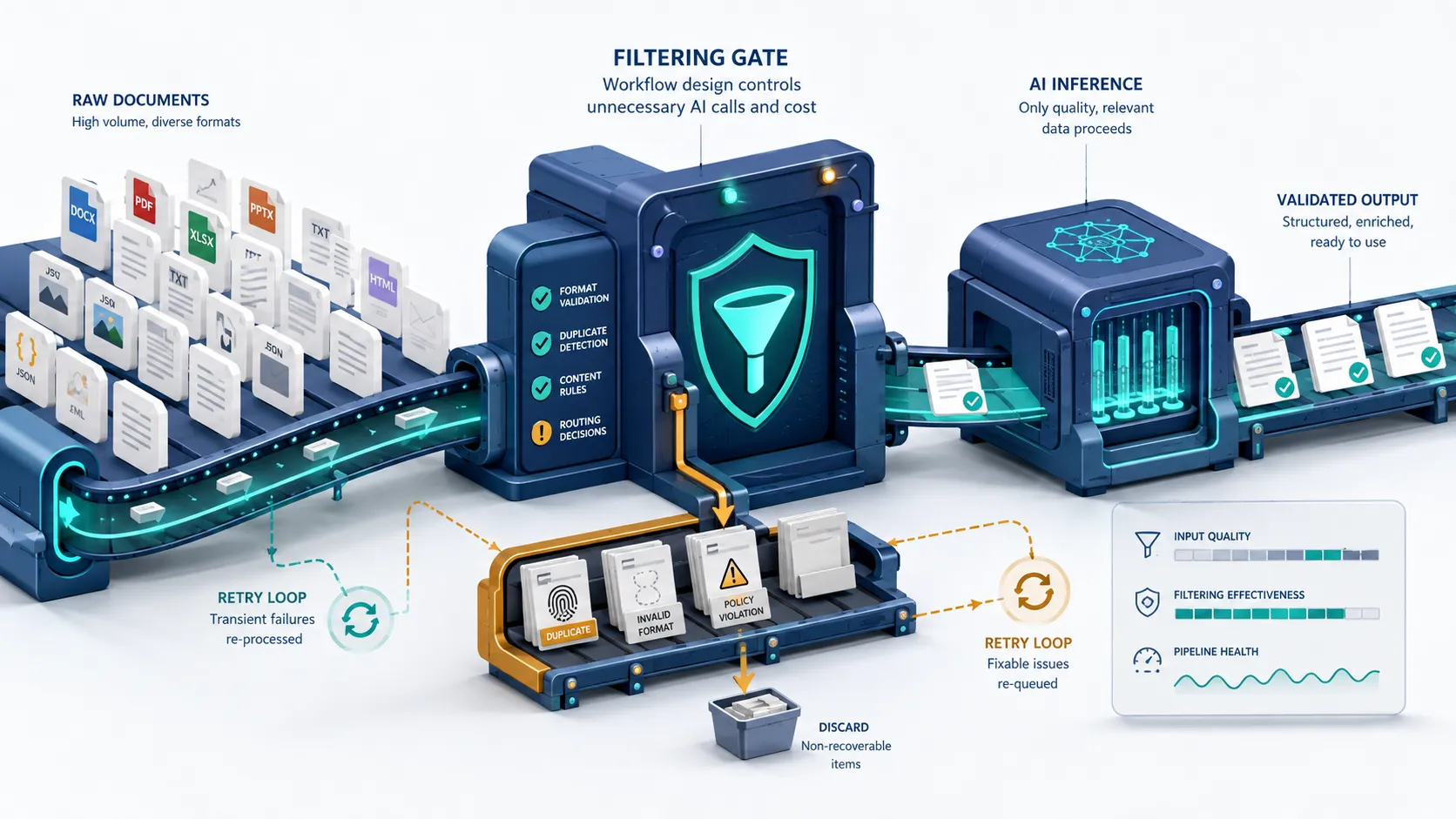
- AWS’s ADOP reference architecture uses specialized agents on Amazon Bedrock across the Bronze-to-Silver-to-Gold lifecycle. Its more consequential idea is not code generation, but automation with governance and compliance embedded in the flow.
- Teams can evaluate agentic AI as a controlled orchestration layer for repetitive data work rather than as an isolated assistant.
- Map the permission, quality, and approval gates for one recurring source onboarding process before piloting an agent.
What happened
Agentic AI is moving into a more operational role in data engineering: coordinating onboarding, transformation, and controls rather than merely answering questions about data. For engineering teams, the test is whether a multi-step process becomes easier to inspect, approve, and run.
AWS describes its Agentic Data Operations Platform (ADOP) as an Amazon Bedrock reference architecture with specialized AI agents spanning the Bronze-to-Silver-to-Gold pipeline lifecycle. AWS says the architecture targets new-source onboarding in hours rather than weeks while keeping governance and compliance controls inline.
The shift is orchestration, not just generated code
An agent is useful when it receives a bounded task, calls authorized tools, and produces an output another system can consume. That is materially different from asking a language model for SQL and manually pasting the result into a pipeline.

Bronze, Silver, and Gold remain operational boundaries for raw, refined, and consumption-ready data. A sound agent workflow should make those boundaries more visible: teams need to trace data origin, transformation decisions, and approval state.
Make governance an execution condition
ADOP’s emphasis on inline governance and compliance is the important design signal. Access checks, data-quality rules, and approvals should be workflow gates, not follow-up tasks after a dataset has already been published.
A reference architecture cannot automatically encode an organization’s policy. Before deploying anything, define who can invoke an agent, which tools it may call, what data cannot enter its context, and where an operator can stop or reverse execution.
Start with one bounded onboarding path
A repeated source with a reasonably stable schema and quality criteria is a practical pilot. Measure request-to-usable-dataset time, manual interventions, defects caught before publication, and completeness of the audit trail.
Do not combine pipeline creation, organization-wide permissions, and broad release in the first experiment. A narrow pilot reveals where agent reasoning helps and where deterministic rules or conventional orchestration remain the better choice.
In 5 Minutes
- AWS positions ADOP as specialized agents on Amazon Bedrock for the Bronze-to-Silver-to-Gold lifecycle.
- The key idea is governed automation, not faster code generation alone.
- Pilot a bounded, repeatable source onboarding workflow.
- Keep tool permissions, approvals, and auditability under team control.
Sources
- Agentic Data Operations Platform (ADOP): Data engineering into hours
- Connecting retail demand planning to campaign and store execution
- Designing effective Genie Agents from a single prompt
- Databricks Document Intelligence: pushing the frontier for complex document extraction
- When it comes to Governance, Retailers need a control plane for context
Why developers should care
Teams can evaluate agentic AI as a controlled orchestration layer for repetitive data work rather than as an isolated assistant.
Recommended action
- 1Map the permission, quality, and approval gates for one recurring source onboarding process before piloting an agent.