Quick summary
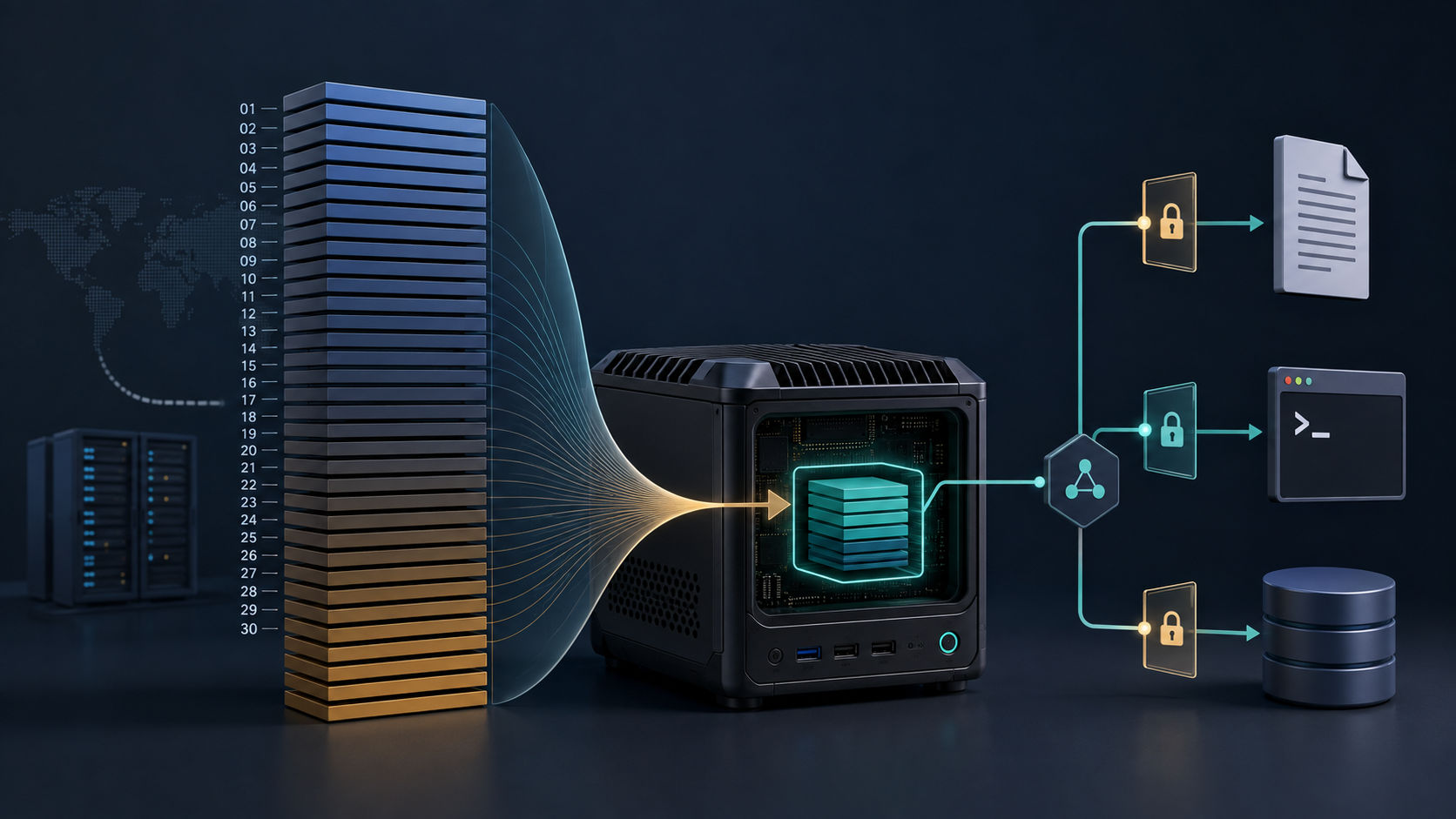
- Meta has introduced Muse Glimmer, a 30-billion-parameter open-weight model distilled from Muse Spark for on-device agentic workflows. The announcement establishes its direction, but not yet its hardware requirements, measured performance, licensing details, or production readiness.
- A capable local model could change where agent loops execute and which data must leave a device. Developers should nevertheless treat Muse Glimmer as an evaluation candidate until its artifacts, runtime compatibility, resource profile, and license are verified.
- Monitor the official Muse Glimmer release materials and validate the license, weights, ExecuTorch compatibility, hardware support, and end-to-end agent performance before committing to an architecture.
What happened
Meta has introduced Muse Glimmer, a 30-billion-parameter open-weight model distilled from Muse Spark and intended for on-device agentic workflows. The important engineering question is not merely whether a model can be loaded locally, but whether a complete tool-using loop can run reliably within a target device’s resource limits.
The available announcement gives Muse Glimmer a clear positioning, but it does not provide enough evidence to judge deployment readiness. In particular, “on-device” should not be read as universal compatibility with laptops, edge systems, or every class of local GPU.
What is actually confirmed about Muse Glimmer?
The PyTorch Korea community post about Muse Glimmer identifies three concrete properties: the model has 30 billion parameters, it was distilled from Muse Spark, and its weights are open. It also frames the model around agentic workflows executed on a device.
Distillation generally transfers selected behavior from a source model into a target model during training. It can be used to produce a more deployment-oriented model, but the term alone says nothing about retained quality, supported tasks, runtime speed, or the target’s performance relative to its teacher.
Open weights should also be distinguished from a completely open development stack. Weight availability does not, by itself, specify commercial permissions, redistribution terms, training-data disclosure, training code availability, or modification rights. Those points require the actual license and release materials.
Why does a 30-billion parameter count not answer the deployment question?
Parameter count is only one input to a capacity plan. Weight precision, quantization, runtime representation, context length, caches, intermediate tensors, and execution backend can all change the memory required to run a model. Generation speed likewise depends on the hardware and software path rather than parameter count alone.
The supplied excerpt begins to mention ExecuTorch and NVIDIA GPUs but ends before describing the specific change. It therefore does not establish which GPUs, operating systems, accelerators, backends, or optimization paths are supported. No benchmark figures or minimum device specifications are available in the supplied record either.
| Supported by the announcement | Still needs verification |
|---|---|
| 30 billion parameters | Weight format and quantization options |
| Distilled from Muse Spark | Memory footprint and measured latency |
| Described as open-weight | Exact license and redistribution terms |
| Designed for on-device agents | Compatible devices and execution backends |
These unknowns are material. A model release can be technically available while remaining unsuitable for a particular workstation, mobile product, or edge deployment because of memory, thermal, energy, or latency constraints.
What would on-device execution change for an agent architecture?
An agent consists of more than a language model. A production workflow typically needs orchestration, tool schemas, argument validation, permission boundaries, state handling, termination conditions, and recovery from failed tool calls. Local inference moves one component; it does not eliminate the need to engineer the rest of the control plane.
Keeping inference on a device could reduce the amount of prompt or context data sent to a remote model endpoint. That is a possible architectural benefit, not an automatic privacy guarantee. Tools, plugins, telemetry, crash reports, and retrieval services may still communicate with external systems.
It is also possible for an agent to use a local model while remaining dependent on the network. A search tool, business API, shared database, or remote identity service can keep the workflow online even when token generation is local. Teams should therefore document the boundary of every tool rather than labeling the entire product “offline.”
How should developers evaluate the release?
Start with release integrity and compatibility. Before building an integration, verify the official license, weight format, checksums, supported ExecuTorch version, backend requirements, and publisher-provided examples. None of these details should be inferred from the parameter count or the open-weight label.
Next, use a task suite that resembles the intended product. It should test tool selection, structured argument generation, handling of failed or malformed results, loop termination, and behavior when a network-dependent tool is unavailable. Measure complete task latency and success rather than only model-level token throughput.
- Benchmark on the same device class intended for deployment.
- Record peak memory, end-to-end latency, energy or thermal constraints, and failure rates.
- Apply least-privilege permissions to every callable tool.
- Set limits for steps, execution time, and resource consumption.
- Maintain a fallback path when the model or local backend cannot complete a task.
The most useful comparison will be against an existing baseline under the same workload and hardware conditions. Until the full release artifacts and measurements are available, Muse Glimmer is best treated as a promising candidate for controlled evaluation rather than a proven production default.
Conclusion
- Muse Glimmer is a 30-billion-parameter open-weight model distilled from Muse Spark.
- Its stated focus is on-device agentic workflows, not universal device compatibility.
- The current evidence does not establish memory needs, speed, licensing terms, or supported hardware.
- Teams should evaluate the complete agent loop on target hardware after verifying official artifacts.
Related reading
- AI Functions in the data warehouse: where should low-code ML start?
- No-code machine learning still needs governance controls
- No-code machine learning from Snowflake to predictive dashboards
Source
Why developers should care
A capable local model could change where agent loops execute and which data must leave a device. Developers should nevertheless treat Muse Glimmer as an evaluation candidate until its artifacts, runtime compatibility, resource profile, and license are verified.
Recommended action
- 1Monitor the official Muse Glimmer release materials and validate the license, weights, ExecuTorch compatibility, hardware support, and end-to-end agent performance before committing to an architecture.