Quick summary
- Updates from Vercel, GitHub, and Cloudflare show agents moving beyond standalone chat experiences. They are appearing where developers build interfaces, deliver software, search private data, and collaborate with teams.
- The value proposition is shifting from one-off answers to work performed inside the tools, context, and controls that teams already use.
- Map one repetitive SDLC workflow and pilot an agent with least-privilege access, human approval, and complete logging.
What happened
AI agents are moving from optional experiments to core product surfaces. The important signal is not a new model release: it is that developer platforms are placing agent capabilities in APIs, collaboration spaces, software-delivery flows, and data infrastructure.
For engineering teams, the practical question is now where an agent belongs in a workflow, what it may do, and how its work will be reviewed.
Developer products are exposing agents in different places
Vercel announced a new v0 API and Agent Plugins. The announcements address different needs, but both make agent capability available for integration rather than limiting it to a closed, single-product experience.

GitHub is embedding agents where delivery work already happens. Its guide to agent apps in GitHub covers scoping, securing, rolling out, and shipping a feature across the SDLC. GitHub has also announced a new Copilot experience in Slack and shared agentic work in Microsoft Teams.
Why a product surface is more consequential than a chatbot
A chatbot provides an entry point for questions. An integrated product surface provides an entry point for work: it can receive context from team activity, access an appropriate data source, and return a result where a decision is made.
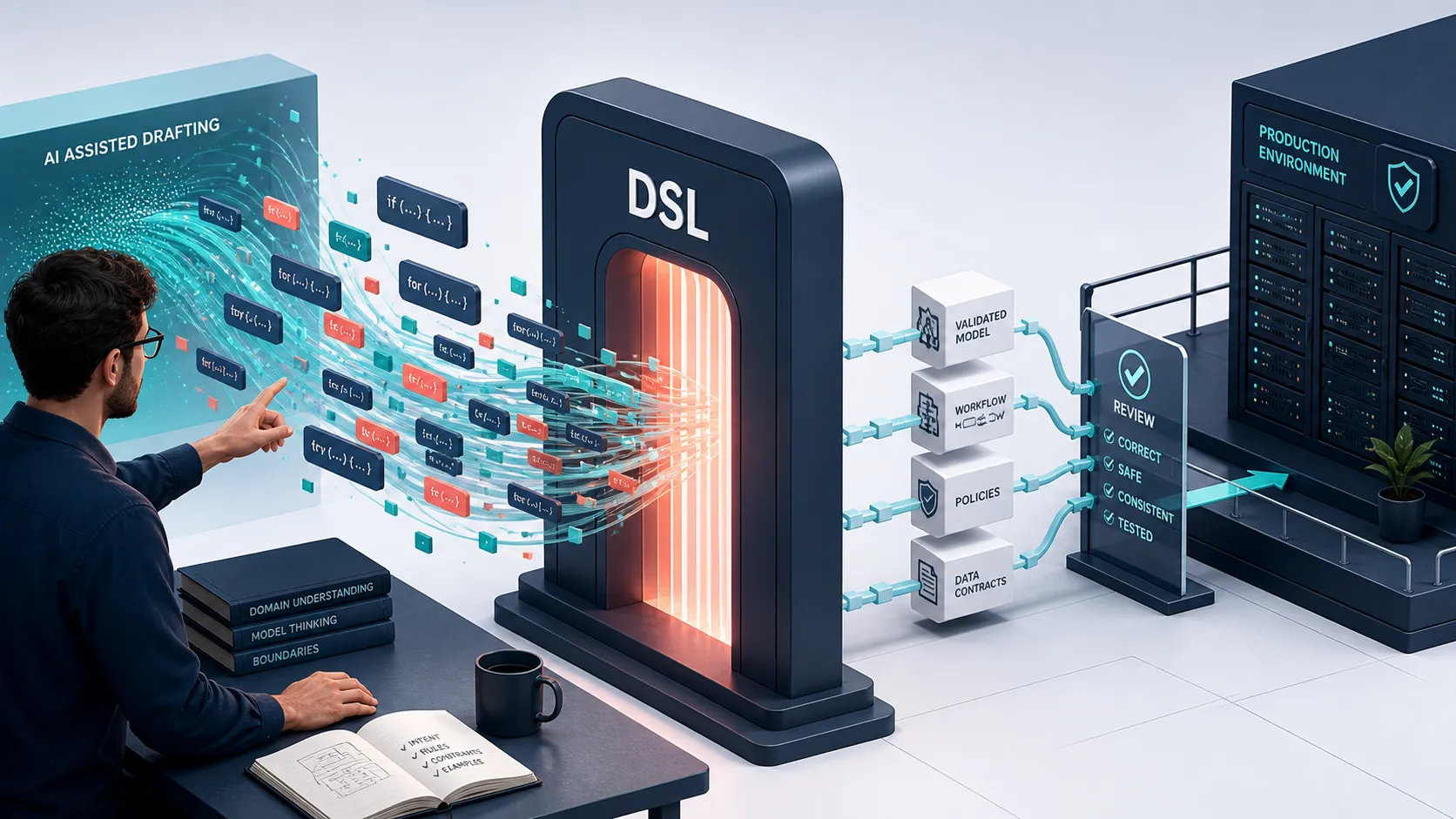
That is an operational as well as an architectural change. Once an agent can touch repositories, internal knowledge, release systems, or team communication, permissions, auditability, output evaluation, and approvals are product requirements rather than afterthoughts.
Infrastructure is being packaged for agent use too
Cloudflare describes AI Search as a way to create search over private files and websites without stitching together Cloudflare primitives. It is evidence that retrieval is increasingly being offered as a ready-to-use capability for agents, rather than only as a bespoke RAG project.
Cloudflare's account of the next generation of MCP says its rewritten core is stateless and works on Workers, with protocol changes and an SDK migration path. That does not settle questions of quality or security, but it can reduce friction in connecting tools and context to agents.
Evaluate the workflow, not the demo
Do not begin by asking which agent appears most capable. Pick a workflow with explicit inputs, allowed tools, and a reviewable output: issue triage, change review, rollout preparation, or technical-document search.
- Separate actions an agent may recommend from actions it may execute.
- Scope data and tool access to the task rather than granting broad standing access.
- Measure correctness, cost, latency, and human intervention.
- Retain prompts, tool calls, and approval decisions for higher-risk flows.
The broader shift is not that every product needs its own agent. It is that agents are increasingly expected to meet the standard of real product features: integrated, bounded, and operable.
In 5 Minutes
- Agents are entering APIs, GitHub workflows, Slack, Teams, and data infrastructure.
- They matter most when they operate in a contextual, reviewable workflow.
- MCP and managed search reduce integration friction; they do not replace security controls.
- Start with one narrow task and explicit permissions and evaluation criteria.
Sources
- Cloudflare AI Search: give your agents a search engine for your data
- The next generation of MCP
- Building an open Agentic Internet: readable, discoverable, callable, and payable
- How to bring your software delivery workflow into GitHub with agent apps
- The new GitHub Copilot experience in Slack
- Shared agentic work with GitHub Copilot in Microsoft Teams
- Introducing Agent Plugins
- Introducing the new v0 API
Why developers should care
The value proposition is shifting from one-off answers to work performed inside the tools, context, and controls that teams already use.
Recommended action
- 1Map one repetitive SDLC workflow and pilot an agent with least-privilege access, human approval, and complete logging.