Quick summary
- Banksalad has published a post about generating test data with an LLM, but the supplied source record does not expose its implementation or results. This article separates the verified scope from a practical evaluation framework for engineering teams.
- LLMs may help teams explore more test-data variations, but generated records still require deterministic validation, privacy controls, reproducibility, and a safe fallback path.
- Review the original Banksalad post for implementation details, then test the concept on one non-sensitive schema with deterministic validators and existing fixtures as a baseline.
What happened
Banksalad has published a technical post about generating test data with an LLM. The subject is relevant to teams that spend substantial effort preparing fixtures, representing edge cases, or maintaining data sets across changing application schemas.
The supplied source record, however, contains only the post’s title and a one-line description. It does not provide enough evidence to report Banksalad’s model choice, architecture, prompts, validation strategy, performance, or production results.
What is actually confirmed?
The official Banksalad Tech article is described as an introduction to how the company creates test data, with an LLM featured in the approach. That scope is verified by the source metadata; more specific implementation claims are not.
In particular, the available material does not say whether generation happens locally or through a hosted service, whether it targets frontend fixtures or linked backend records, or whether humans review the output. It also supplies no benchmark for coverage, developer time, cost, or defect detection.
Those omissions prevent a responsible architectural reconstruction. “LLM-generated test data” can describe anything from drafting a few example objects to participating in a controlled data-generation pipeline, and the operational implications differ substantially.
Where could an LLM fit without becoming the test oracle?
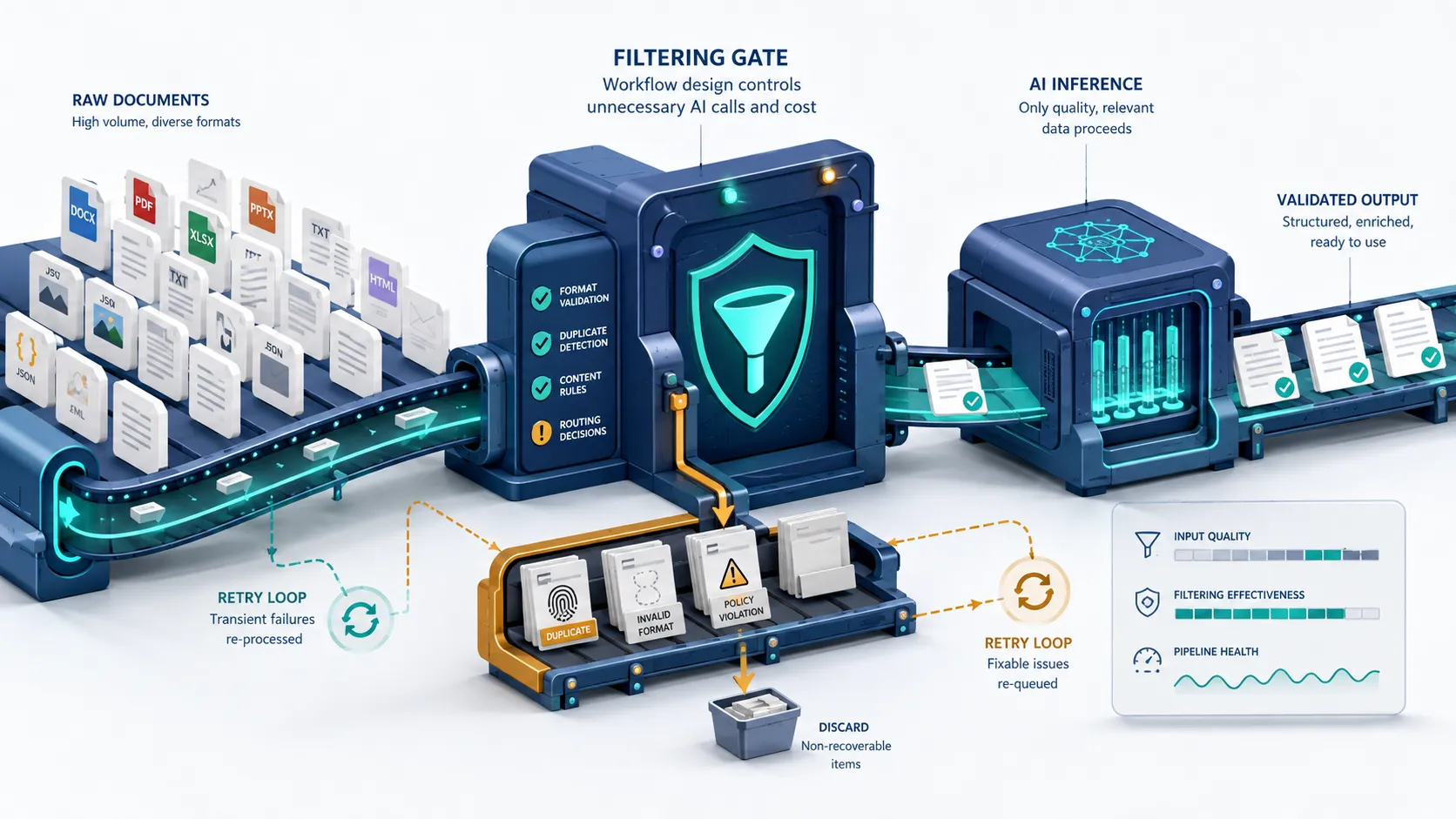
For teams evaluating the idea, the safest initial framing is to treat the model as a candidate generator, not as the authority that decides whether a record is valid. Application code and explicit data contracts should retain that responsibility.
The following is a recommended evaluation pattern, not a claim about Banksalad’s system:
- Define the target schema, required fields, allowed ranges, and cross-record relationships.
- Request machine-parseable output and reject malformed responses before they reach a test environment.
- Run deterministic checks for types, uniqueness, referential integrity, and business invariants.
- Store only accepted synthetic records in an isolated fixture or test-data store.
- Record the generation configuration needed to explain changes in a test run.
This separation makes failures easier to diagnose. The model can increase the variety of proposed examples, while validators provide a stable acceptance boundary.
What should teams protect before running a pilot?
Privacy is the first gate. Production customer records, credentials, internal secrets, and identifying information should not be placed in prompts without an approved data-handling design. A synthetic-data experiment should be structured so that useful cases can be generated from schemas and constraints rather than copied sensitive examples.
Semantic validity is another concern. Syntactically correct JSON can still violate domain rules, create impossible state transitions, or reference entities that do not exist. Schema parsing is therefore necessary but insufficient; business-level assertions must also run before generated records become fixtures.
Reproducibility matters whenever a test is expected to detect regressions. Uncontrolled variation can make a changing data set look like an application defect—or hide a real one. Stable fixtures should remain available for critical regression paths, even if generated variants are used for exploratory coverage.
Teams should also plan for model latency, unavailable dependencies, malformed output, and spending limits before putting generation on a required CI path. A test suite needs a documented fallback rather than becoming blocked by a non-deterministic external step.
How can a small trial produce useful evidence?
Choose one non-sensitive domain with a precise schema and inexpensive validation. Keep the existing fixture set as a baseline, then evaluate generated candidates against criteria selected in advance: validator acceptance, useful edge cases discovered, manual correction effort, run-to-run stability, and operational overhead.
A pilot should answer a narrow question, such as whether assisted generation adds meaningful boundary cases that developers would otherwise write manually. It should not begin with a goal as broad as replacing all test fixtures.
If generation later becomes part of a larger automated workflow, prompts alone will not make it reliable. The same production-control concerns discussed for browser-native application capabilities apply at the integration boundary: explicit contracts and graceful feature detection are more dependable than assumptions about an external component. In this case, the equivalent controls are schema enforcement, timeouts, observability, and a fallback fixture path.
Conclusion
- The supplied evidence confirms the topic of Banksalad’s post, not its detailed implementation or outcomes.
- An LLM should propose test records while deterministic code enforces acceptance rules.
- Privacy, semantic validation, reproducibility, and failure handling belong in the pilot design.
- A constrained comparison with existing fixtures is more informative than an immediate system-wide rollout.
Related reading
- Browser-native APIs are reshaping interactive web development
- Web cache optimization now starts with measurable memory, storage, and cost
Source
Why developers should care
LLMs may help teams explore more test-data variations, but generated records still require deterministic validation, privacy controls, reproducibility, and a safe fallback path.
Recommended action
- 1Review the original Banksalad post for implementation details, then test the concept on one non-sensitive schema with deterministic validators and existing fixtures as a baseline.