Quick summary
- How to design an Ansible automation orchestrator as a control plane for workflows, inventory, credentials, execution capacity, approvals, and audit at scale.
- Once automation expands to hundreds of jobs shared by multiple teams, isolated playbook runs are no longer enough. A control plane is needed to keep execution order, access, capacity, and change history consistent.
- Choose one manually coordinated multi-step process, model validation, approval, change, and verification as a workflow, then measure queue time, success rate, and recovery time.
What happened
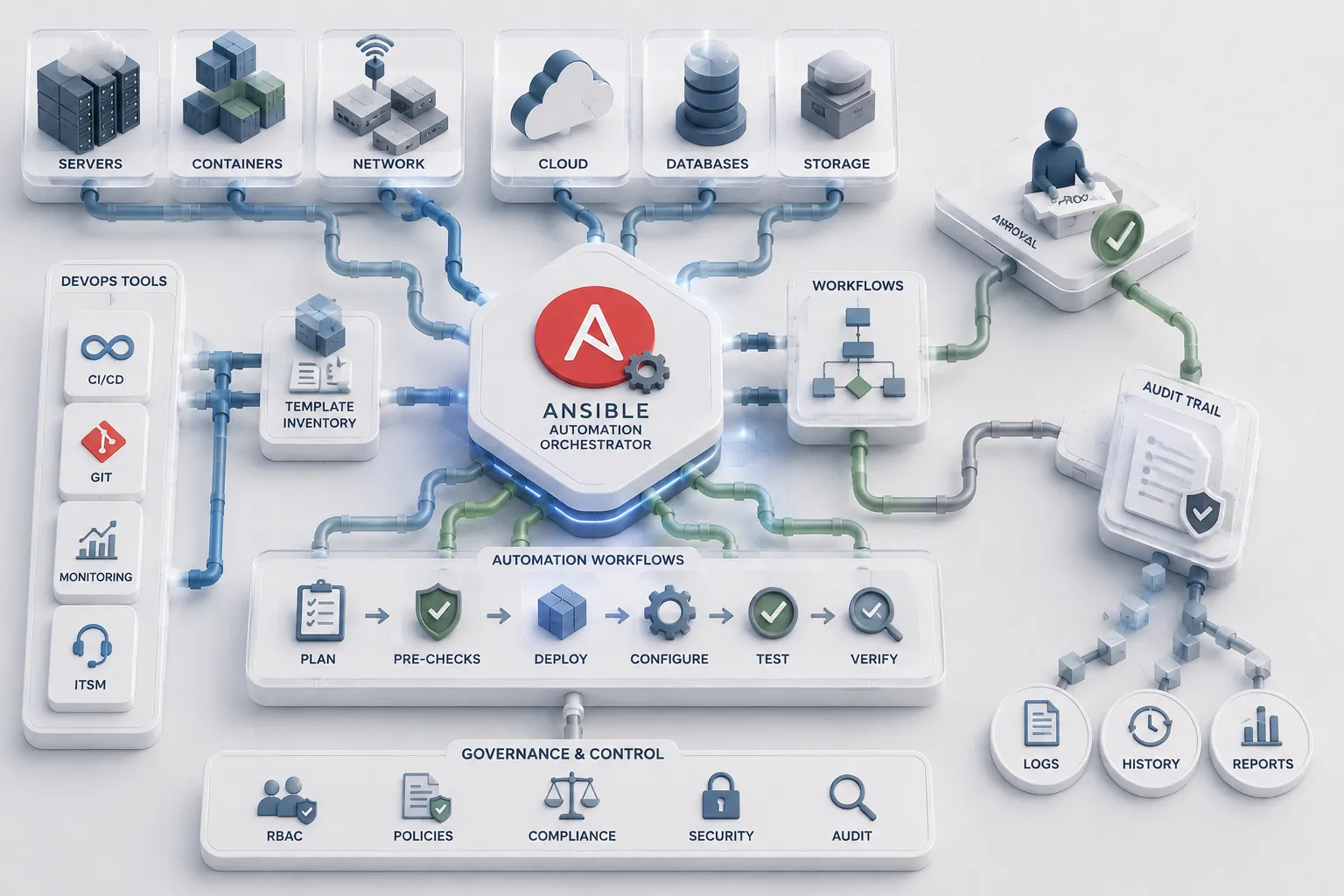
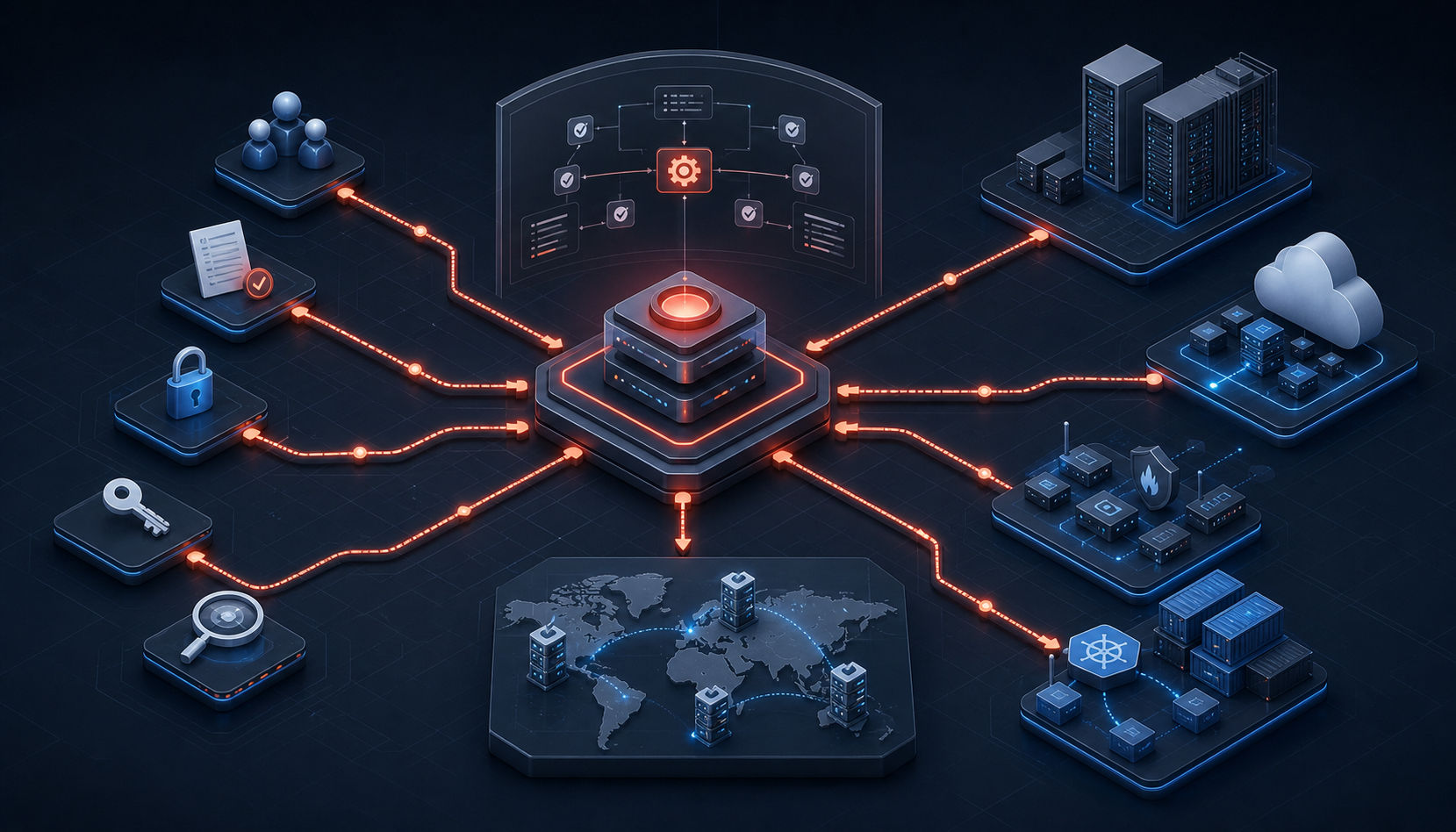
An Ansible automation orchestrator turns isolated jobs into governed workflows. It decides which automation may run, in what order, against which inventory, with which credential, and under whose approval. It is an automation control plane, not merely a graphical button for launching playbooks.
When does automation need orchestration?
A small team can run playbooks from the command line. Complexity appears when teams share inventories, cross environments, require approvals, or must prove who changed a system. Basic scheduling cannot manage dependencies, authorization, recovery, and audit on its own.
Components of the control plane
- Inventory: the source of truth for hosts, groups, variables, and environment boundaries.
- Automation content: versioned playbooks, roles, collections, and execution environments.
- Credential boundary: centrally held credentials released only to authorized jobs.
- Workflow engine: dependencies, conditions, approvals, retries, and failure branches.
- Execution capacity: placement of jobs on nodes suited to the target network, location, and load.
- Audit trail: inputs, versions, initiators, approvals, and results.
Design workflows that operators can support
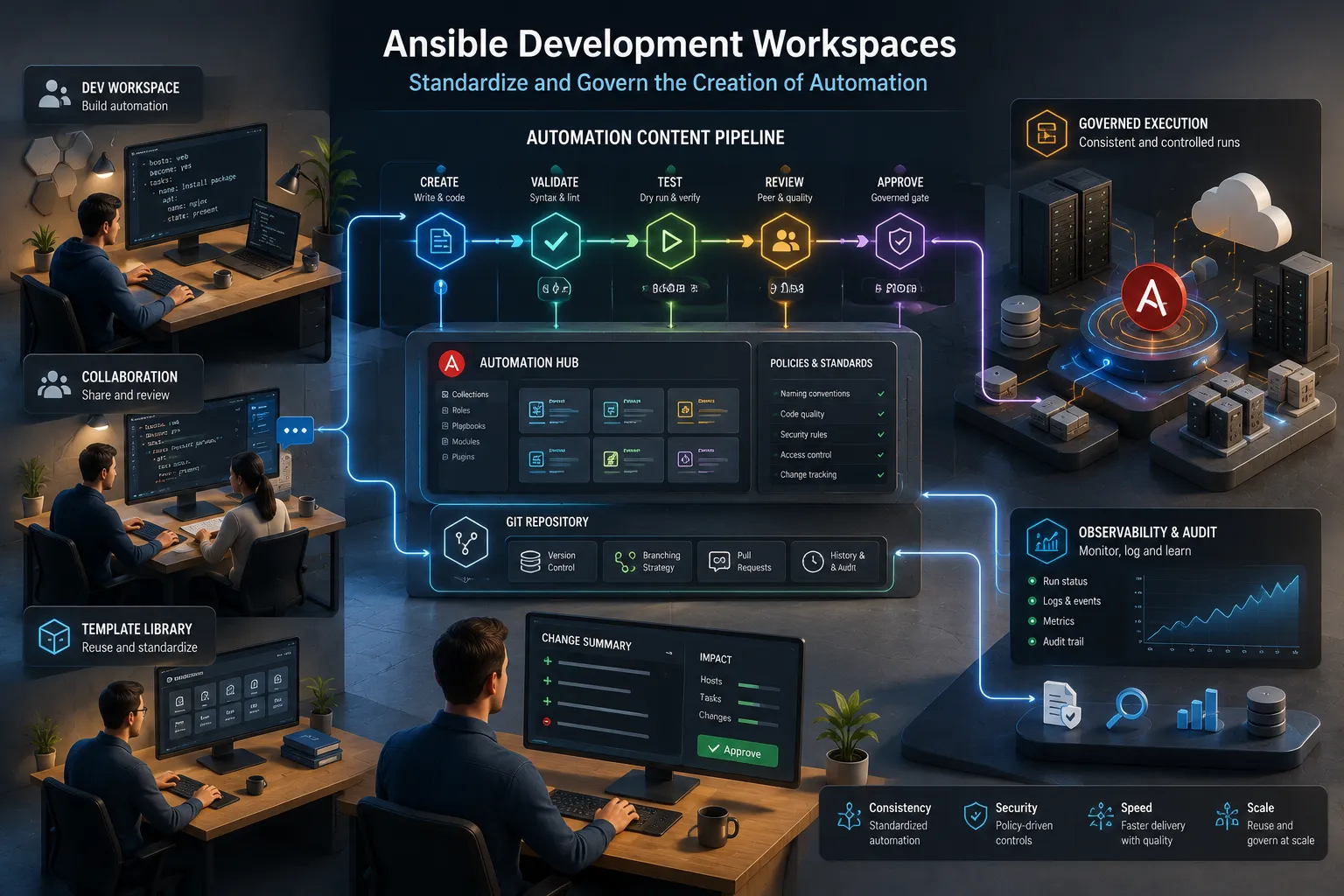
Every workflow needs a clear input contract, pre-change checks, the smallest practical scope, and measurable success criteria. Separate validation, change, verification, and recovery into distinct nodes. Operators can then locate a failure and rerun a safe section instead of repeating the entire process.
Idempotency remains foundational. An orchestrator can retry a task, but it cannot repair uncontrolled side effects. Modules and playbooks should describe desired state, support check mode where appropriate, and handle partial failure deliberately.
Control inventory and credentials
Synchronize inventory from trusted systems rather than copying static files between projects. Keep credentials outside automation content, bind them to roles, and expose them only for job duration. Authorization must cover both who can launch a template and which inventory that template may affect.
Scale execution capacity
Placing execution nodes near target systems reduces firewall exposure and improves reliability. Segment jobs by network zone, workload type, and priority. Track queue time, runtime, failure rate, and capacity utilization so scaling decisions are based on evidence.
Governance without blocking delivery
Approvals belong at risk boundaries: production, broad changes, sensitive data, or actions that are difficult to reverse. Read-only checks, validation, and lower environments can remain automatic. Standard templates, surveys, and roles enable self-service without granting broad credentials.
Implementation checklist
- Classify automation by owner, environment, impact, and frequency.
- Standardize execution environments and pin dependency versions.
- Separate credentials from source code and enforce least privilege.
- Model validation, change, verification, and recovery as workflow stages.
- Place execution nodes according to network boundaries and capacity needs.
- Measure success rate, queue time, recovery time, and manual work eliminated.
A strong orchestrator provides the standard path for automation to reach production. Teams move faster because every workflow carries the required access rules, controls, observability, and operational evidence.
Why developers should care
Once automation expands to hundreds of jobs shared by multiple teams, isolated playbook runs are no longer enough. A control plane is needed to keep execution order, access, capacity, and change history consistent.
Recommended action
- 1Choose one manually coordinated multi-step process, model validation, approval, change, and verification as a workflow, then measure queue time, success rate, and recovery time.