Quick summary
- AI infrastructure investment is spreading beyond model development to GPUs, inference capacity, networking, data-center development, power, and cooling. Activity around Groq, SoftBank, Cloverleaf, and Relativity Networks is a reminder that developers must treat compute availability as an architectural constraint, not merely a cloud bill.
- AI product performance and economics increasingly depend on infrastructure availability. Teams that measure demand, build graceful fallbacks, and govern capacity can reduce exposure to latency, cost, and supply shocks.
- Baseline AI workload concurrency, p95 latency, queue time, tokens, and cost, then test at least one fallback path for degraded capacity.
What happened
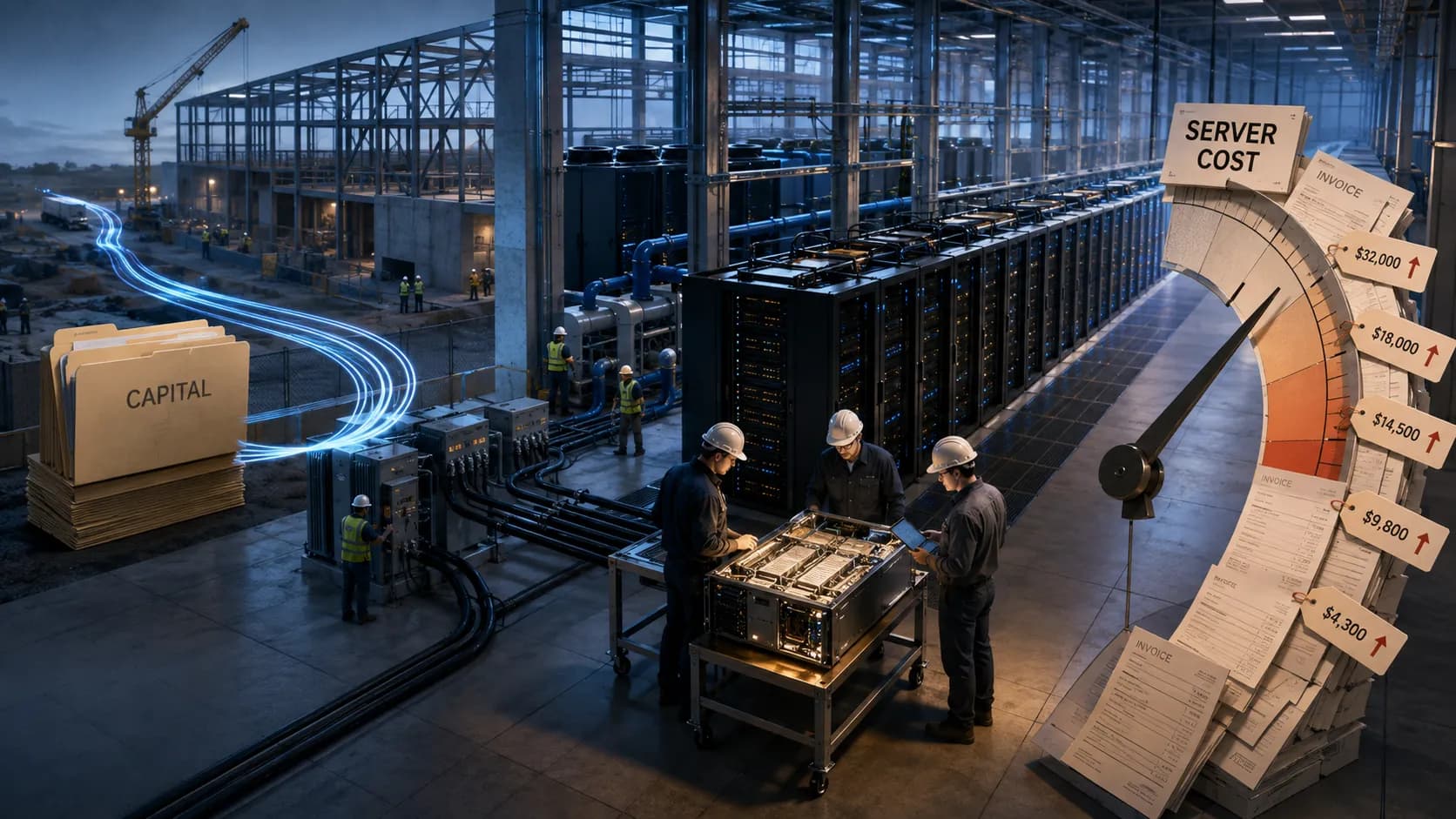
AI spending is moving attention beyond the model itself and toward the systems that make the model usable: servers, GPUs, networks, data centers, electricity, and cooling. For developers and product builders, that is not an abstract facilities story. It can affect compute access, inference latency, and the unit economics of an AI feature.
Recent financing and partnership news shows investment occurring across those layers at once. That does not establish that every project will be delivered on schedule or that capacity is immediately available. It does show that AI infrastructure is becoming a design constraint that teams should assess earlier.
What is changing in AI infrastructure?
The activity is not confined to a single accelerator or cloud provider. Groq reportedly raised $350 million to support a shift from AI chips to a neocloud model, according to coverage of Groq’s financing and neocloud pivot. That direction brings specialized hardware, serving capacity, and the experience of consuming compute closer together as one infrastructure offering.
On the physical-capacity side, Nvidia is reported to be investing $1.5 billion in a SoftBank data-center developer behind an OpenAI project, as described in reporting on Nvidia’s investment. Nvidia also partnered with data-center developer Cloverleaf, according to coverage of the Nvidia–Cloverleaf partnership. Together, those items underline a practical point: the value of AI hardware is closely tied to where it can be installed, powered, and operated.
Networking is another possible bottleneck. Relativity Networks raised $22 million to bring a faster form of fiber to data centers, according to the report on its funding round. A funding round is not evidence of widespread deployment, but it is a useful reminder that scaling AI is not simply a matter of adding accelerators. Data movement and interconnects are part of the system limit, too.
Why are power and cooling technical constraints now?
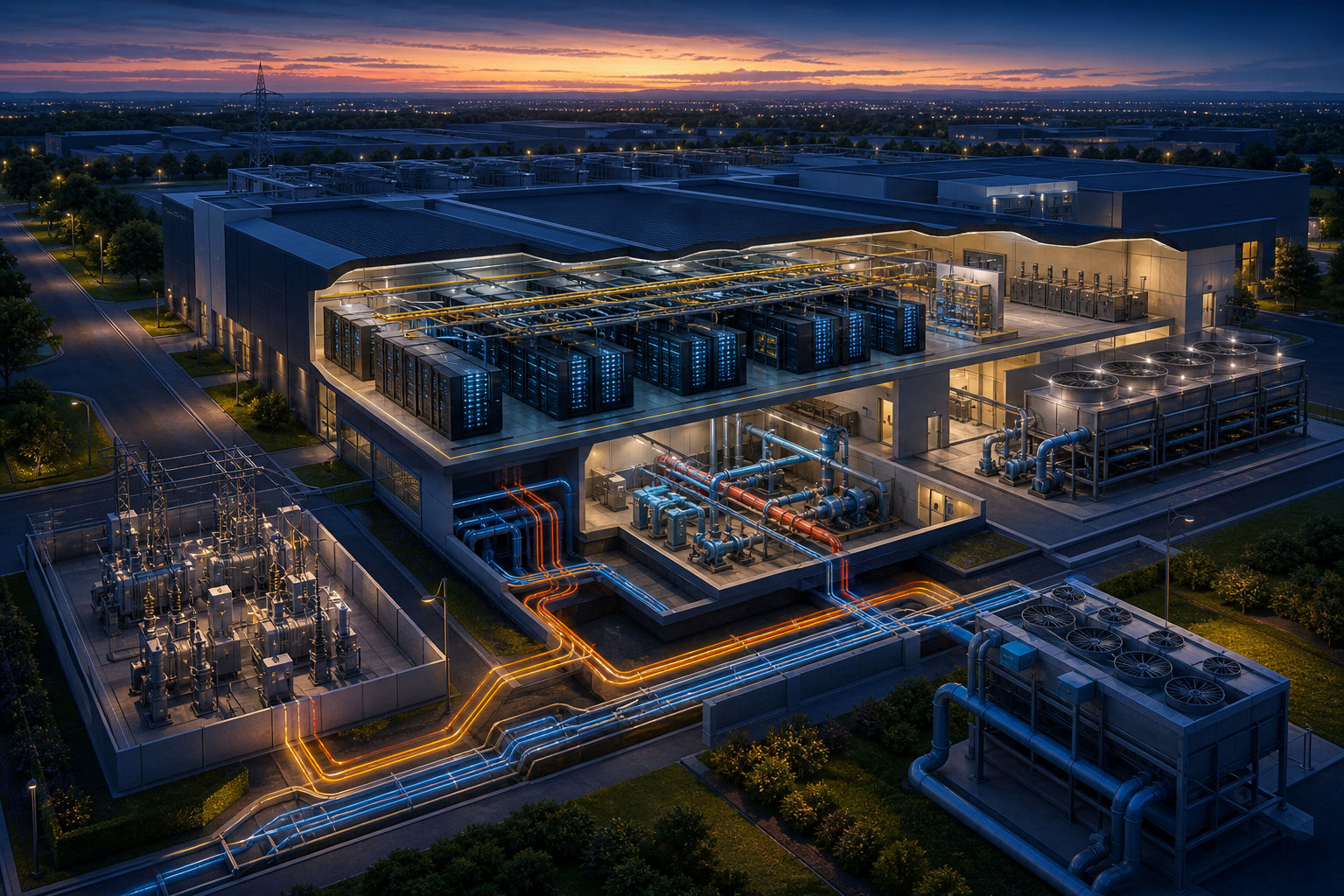
An AI cluster does not produce tokens or inference results through GPUs alone. It needs dependable electrical supply, on-site power distribution, continuous heat removal, and safe operating conditions. If one of those layers fails to keep up, purchasing more hardware does not automatically create usable compute.
Recent coverage has also examined power paths for AI data centers, including TerraPower reactor design and the implications of natural-gas use by hyperscalers. Those are discussions of approaches and forecasts, not proof that one route has solved the electricity problem. The more practical interpretation is that power sourcing, grid-connection timing, and cooling design have become variables to watch when evaluating a region or provider’s long-term capacity.
The same discipline applies to cooling. Novel ideas can be interesting without being commercially proven, operationally suitable, or relevant to a team’s deployment. Cloud customers should focus on whether a provider can sustain capacity, performance, and service commitments for their workloads—not on which cooling concept sounds most dramatic.
How should developers design AI workloads differently?
Not every application needs to operate GPUs or reserve long-term capacity. But assuming that AI compute is unlimited and interchangeable is becoming a risk. Start by separating latency-sensitive, real-time paths from batch processing, evaluation, and deferrable work; that creates options for matching capacity strategy to actual service requirements.
- Measure before committing: record input and output tokens, concurrency, p95 latency, cache-hit rate, queue time, and cost by business flow.
- Plan deliberate degradation: define smaller-model, feature-limited, asynchronous, or queued modes for periods of poor capacity or latency.
- Remove wasted compute: cache appropriate results, batch requests, cap context, and verify that the most expensive model is necessary for the quality target.
- Preserve application-level portability: put model calls behind an internal interface so providers or accelerator-backed services can be tested without rewriting the product.
These are risk-reduction measures, not a blanket case for multicloud. Multiple providers introduce operational complexity, model differences, and a broader security surface. Use that complexity only when service criticality and workload evidence justify it.
Platform teams need to govern capacity, not only deployments
AI makes the boundary between platform engineering and capacity planning less distinct. Choices that appear application-local—model selection, context length, retries, or streaming—can change GPU load and spending. In the other direction, quotas, routing, and workload-admission policy shape the developer experience delivered by a platform.
Bring AI signals into ordinary operations: model- and region-level errors, queue time, quota consumption, unit cost, and fallback performance. When using infrastructure as code, clear ownership of capacity, networking, and workloads still matters; this guide to Pulumi–Terraform ownership boundaries on Kubernetes offers a useful framing for separating responsibilities, even though it is not AI-specific.
Controls should not disappear in a rush to automate AI operations. Access, secrets, auditability, and change approval apply to model endpoints as much as cloud resources. Teams extending automation with agents can also examine how MCP servers can support Ansible-based AI-assisted DevOps without skipping controls.
What should teams watch next?
Separate financing, partnerships, and construction plans from capacity that can actually be purchased and used. In provider or region reviews, ask about practical quotas, queue behavior, hardware choices, network latency, data constraints, pricing terms, and the response when a region becomes capacity-constrained.
For a startup, a three-case demand model—baseline, growth, and spike—is usually more useful than a single forecast. Larger organizations also need procurement plans, flexible commitments, and workload-placement criteria. Both should test fallbacks before an incident rather than assume the provider can absorb a sudden increase in demand.
In 5 Minutes
- AI infrastructure investment now spans chips, neoclouds, data-center development, and networking.
- Power, cooling, and connectivity can limit usable compute; they are not just operational details.
- Measure inference demand, design fallbacks, and remove unnecessary compute before locking in an architecture.
- Manage quota, routing, cost, and ownership as part of platform engineering.
Related reading
- Developer Experience Is the Connecting Layer in Red Hat’s New DevOps Push
- MCP Servers for Ansible: Accelerate AI-Assisted DevOps Without Skipping Controls
- For Kubernetes, Pulumi–Terraform Interoperability Starts With Ownership Boundaries
Sources
- Nvidia partners with data center developer Cloverleaf
- Starcloud raises $250 million for orbital data centers as launch options dry up
- OK, can we actually cool data centers with our pee?
- TerraPower’s nuclear reactor has a secret weapon for powering AI data centers
- Relativity Networks raises $22 million to bring a faster kind of fiber to data centers
- Groq raises $350M to fuel its pivot from AI chips to neocloud
- Nvidia investing $1.5B in SoftBank data center developer behind OpenAI project
- Kog is going deeper to squeeze more inference out of GPUs
- Hyperscalers might regret embracing natural gas if new forecast proves correct
- The moral bankruptcy of Marc Andreessen and Ben Horowitz
- Latest In AI
Why developers should care
AI product performance and economics increasingly depend on infrastructure availability. Teams that measure demand, build graceful fallbacks, and govern capacity can reduce exposure to latency, cost, and supply shocks.
Recommended action
- 1Baseline AI workload concurrency, p95 latency, queue time, tokens, and cost, then test at least one fallback path for degraded capacity.