Quick summary
- Red Hat’s recent work on developer experience, Ansible workspaces, orchestration, MCP, and plug-in security shares a theme: make the compliant development path easier to use. For platform engineering, that is an internal-product problem rather than a tools checklist.
- Developer experience determines whether DevOps guardrails are consistently used or routinely worked around in practice.
- Choose one common automation-creation journey, map friction at every step, and ship one platform improvement with a specific success measure.
What happened
Viewed separately, workspaces, an orchestrator, MCP servers, and plug-in security are different topics. Viewed through a developer’s experience, they answer one question: can engineers create, validate, and operate automation correctly without assembling every piece themselves?
Red Hat also published guidance on developer experience improvements applicable to your own projects. Alongside its recent Ansible and AI material, it suggests a useful framing: DX is the connecting layer between platform capabilities and day-to-day developer behavior.
DX is more than a polished interface
In DevOps, developer experience includes the time required to understand a system, the clarity of the standard path, the quality of failure feedback, and the ability to complete a task with few exceptions. A polished dashboard does little if a developer still needs a ticket to learn how to create compliant automation.

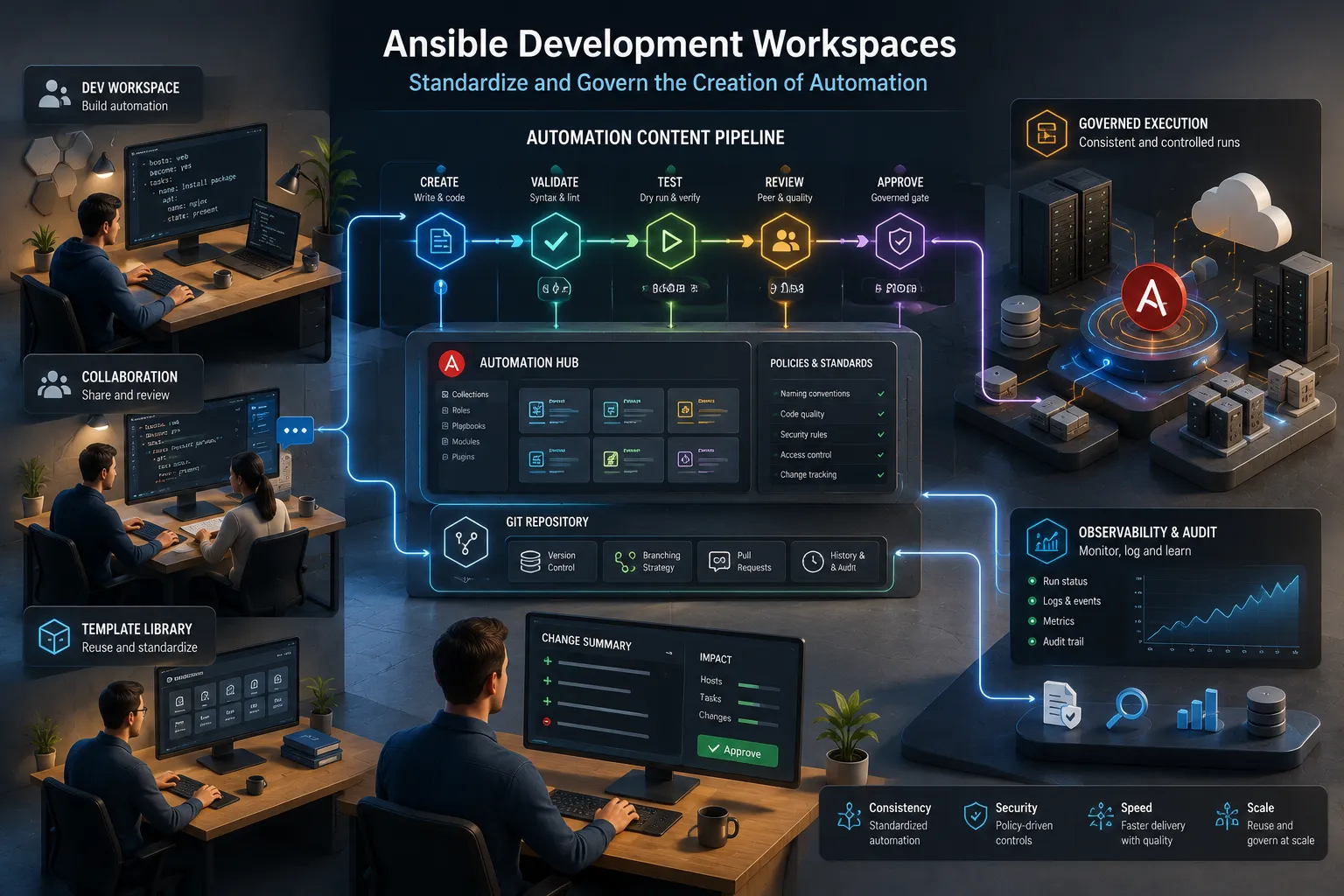
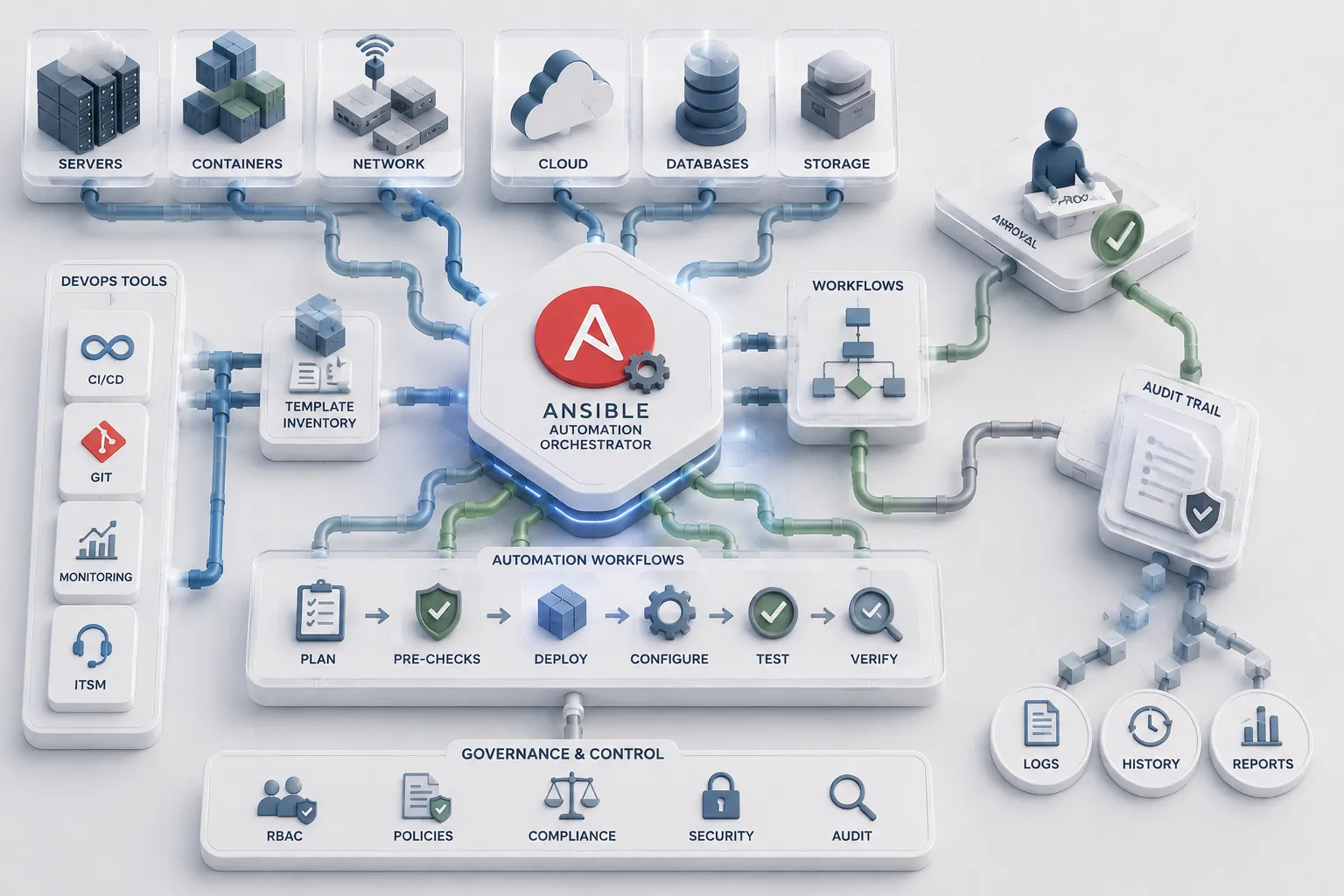
That is why Red Hat’s current themes relate. A development workspace can standardize the starting point. Orchestration can organize multi-step workflows. MCP can change how developers obtain context. Repository security sets limits on how AI tooling is extended.
Treat the platform as an internal product
Effective platform engineering needs identifiable users, important journeys, and continuous feedback. Do not start from a feature catalogue. Start from one concrete journey: a contributor modifies existing automation and takes it through validation and release.
At each step, ask what makes that person leave the flow: missing context, unclear authority, slow feedback, or inconsistent tools. That is where DX investment can produce operational leverage by reducing repeated support work and reducing the temptation to bypass guardrails.
Measure behavior, not satisfaction alone
| Question | Possible signal |
|---|---|
| Is the standard path discoverable? | Time from start to first validated change |
| Are guardrails useful? | Defects found before final review |
| Is the platform creating friction? | Exceptions, support tickets, and manual steps |
| Is AI tooling dependable? | Suggestions accepted after review |
These are suggested indicators, not metrics published by Red Hat. Combine behavior data with short interviews: a lower metric can mean users found an untracked workaround, not that their experience improved.
What should come first
First clarify the basic development and control path. Then standardize the starting point through a workspace or template. Add AI-assisted tooling to verifiable tasks next. Orchestration is often more effective when the underlying content and authority model already have discipline.
This sequence is not a Red Hat product requirement; it is an implementation recommendation intended to avoid automating disorder. Platform teams should prioritize a recurring, observable pain point and release improvements like a product: small scope, rapid feedback, and explicit success criteria.
In 5 Minutes
- DX connects workspaces, orchestration, MCP, and repository security.
- Assess a platform through developer journeys, not a feature list.
- Track feedback time, exceptions, and guardrail use alongside qualitative input.
- Standardize fundamentals before expanding AI and orchestration.
Sources
- Unify IT workflows at scale with the new automation orchestrator for Ansible Automation Platform
- Red Hat Ansible development workspaces for governed automation content creation
- Accelerate automation with AI and the Ansible development tools MCP servers
- Securing Claude Code plug-ins: Best practices for repository security
- Developer experience improvements you can apply to your own projects
Why developers should care
Developer experience determines whether DevOps guardrails are consistently used or routinely worked around in practice.
Recommended action
- 1Choose one common automation-creation journey, map friction at every step, and ship one platform improvement with a specific success measure.