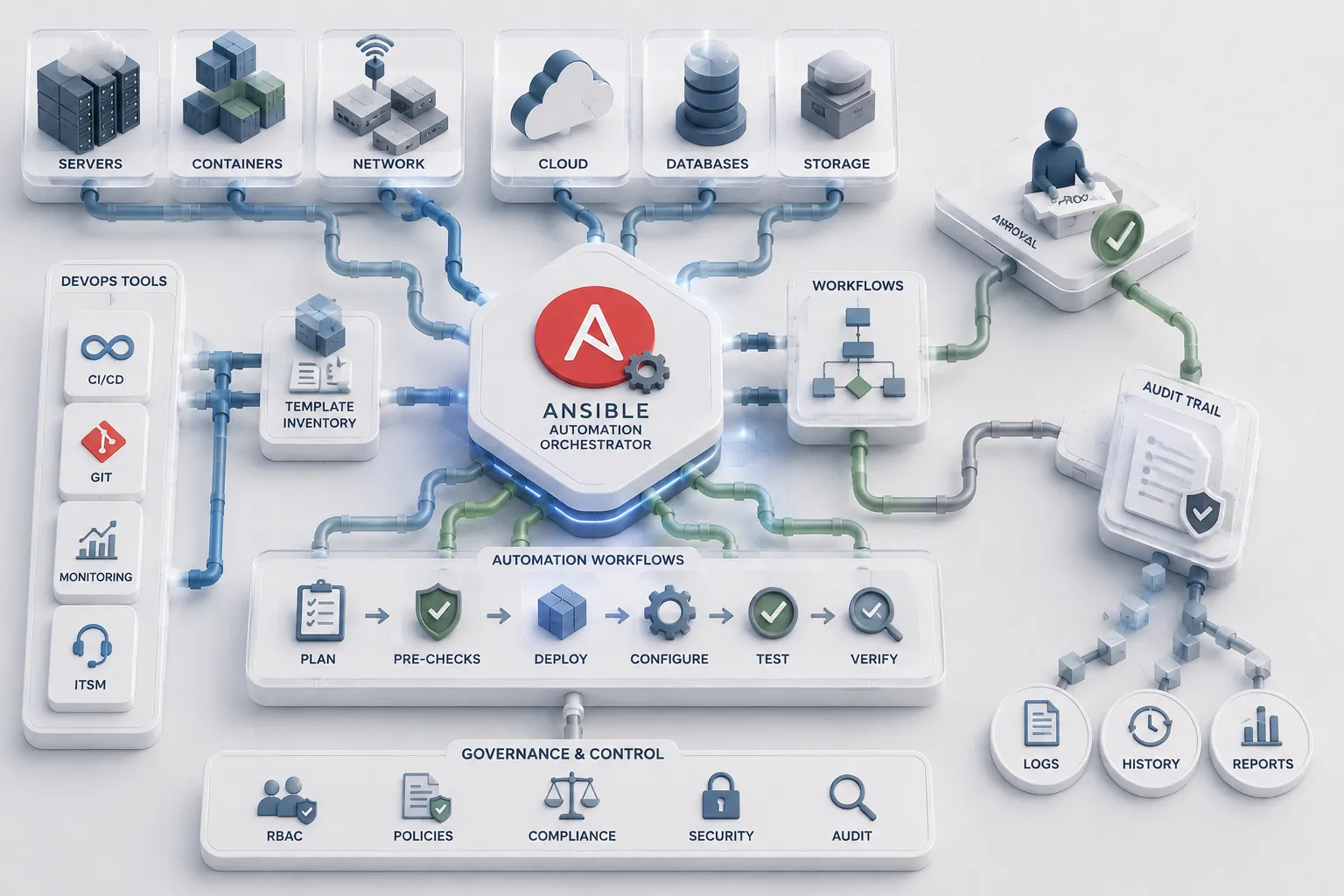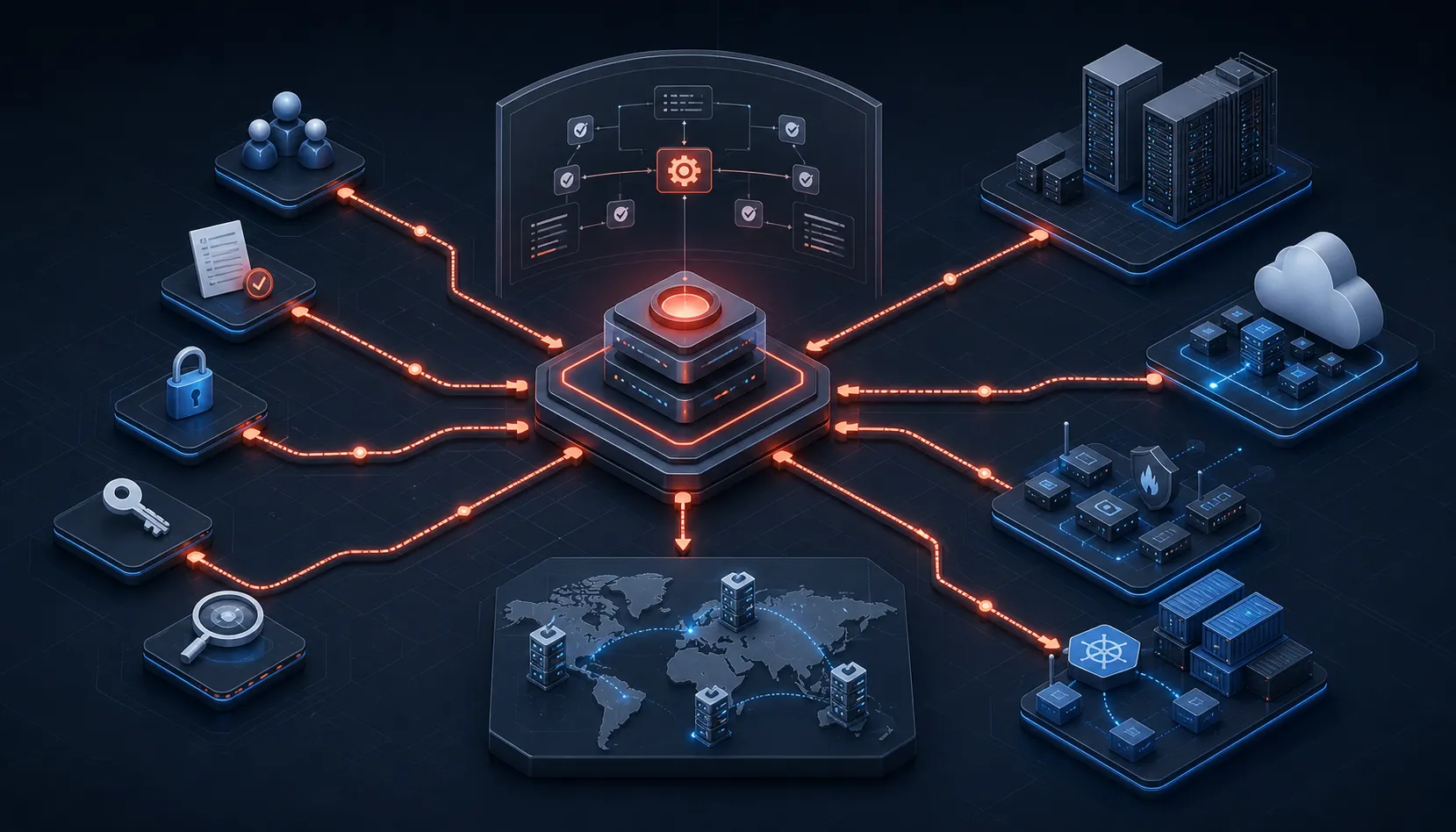
How to design an Ansible automation orchestrator as a control plane for workflows, inventory, credentials, execution capacity, approvals, and audit at scale.

Preparing localized stories and source details.
Search verified, published content only.

How to design an Ansible automation orchestrator as a control plane for workflows, inventory, credentials, execution capacity, approvals, and audit at scale.

Red Hat is describing MCP servers in Ansible development tools as a way to accelerate automation with AI. The opportunity is better context for tools, but teams still need explicit data boundaries, permissions, and output validation.

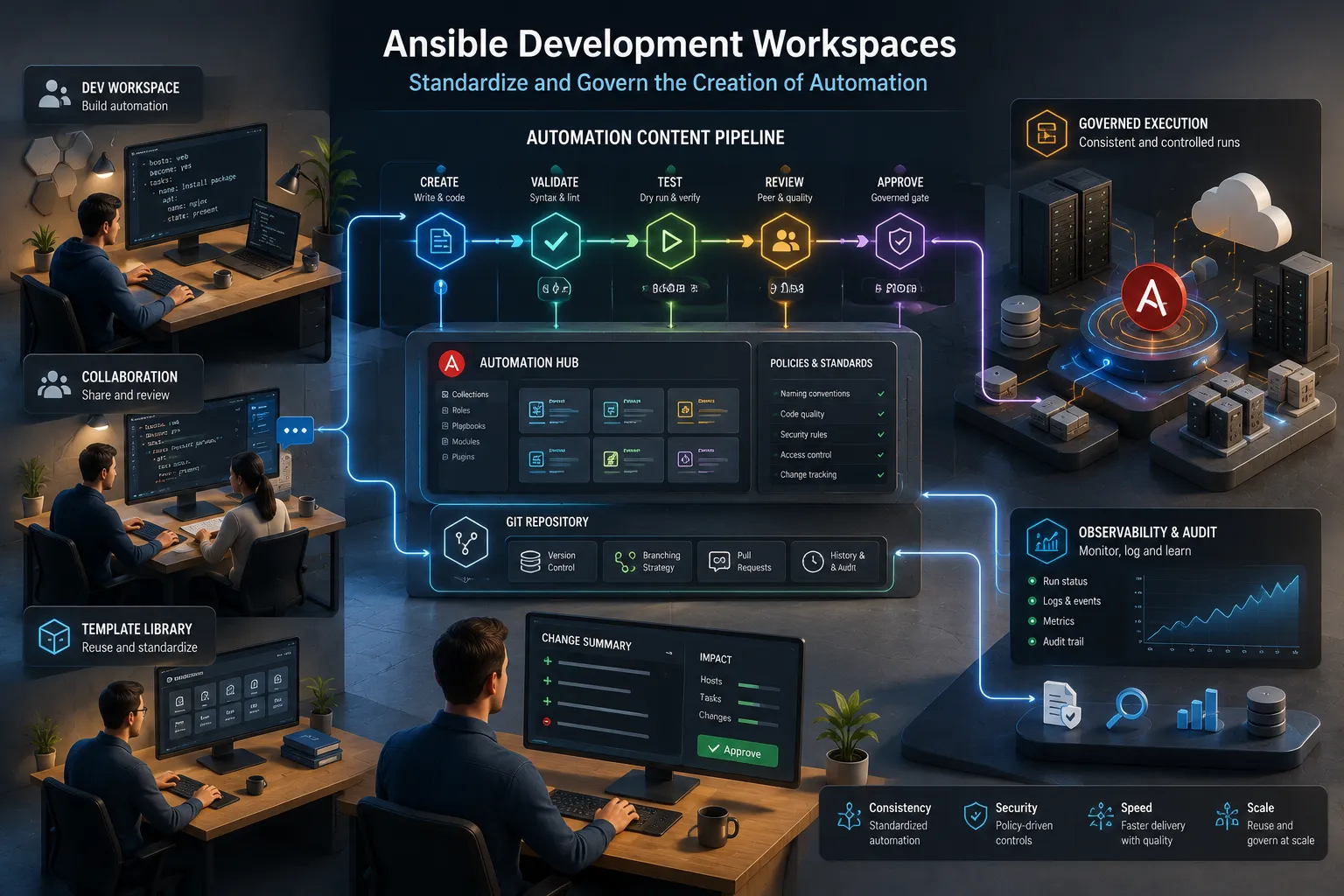
Red Hat is presenting Ansible development workspaces as an approach to governed automation-content creation. The practical opportunity is not simply a workspace, but turning development conventions into the default path for contributors.

Red Hat is positioning Ansible Automation Platform around coordinated IT workflows, not merely individual automation jobs. DevOps teams should use the shift to examine workflow ownership, approval boundaries, and operational evidence before scaling automation.