Quick summary
- Red Hat is presenting Ansible development workspaces as an approach to governed automation-content creation. The practical opportunity is not simply a workspace, but turning development conventions into the default path for contributors.
- Automation content is operational code. As contributor counts rise, inconsistent creation and control practices quickly become an operational risk.
- Pilot a workspace with frequent automation contributors and explicitly identify which guardrails can move earlier in the development path.
What happened
When automation changes infrastructure, its content should be treated as operational code with real risk. Yet many teams still create playbooks in inconsistent environments, apply different conventions, and find problems late in the delivery cycle. Red Hat is proposing a different direction through Ansible development workspaces.
Its article on Ansible development workspaces for governed automation content creation deliberately joins those two ideas. The important signal is that developer experience and governance need not conflict when controls are part of the normal development path.
What a workspace is meant to solve
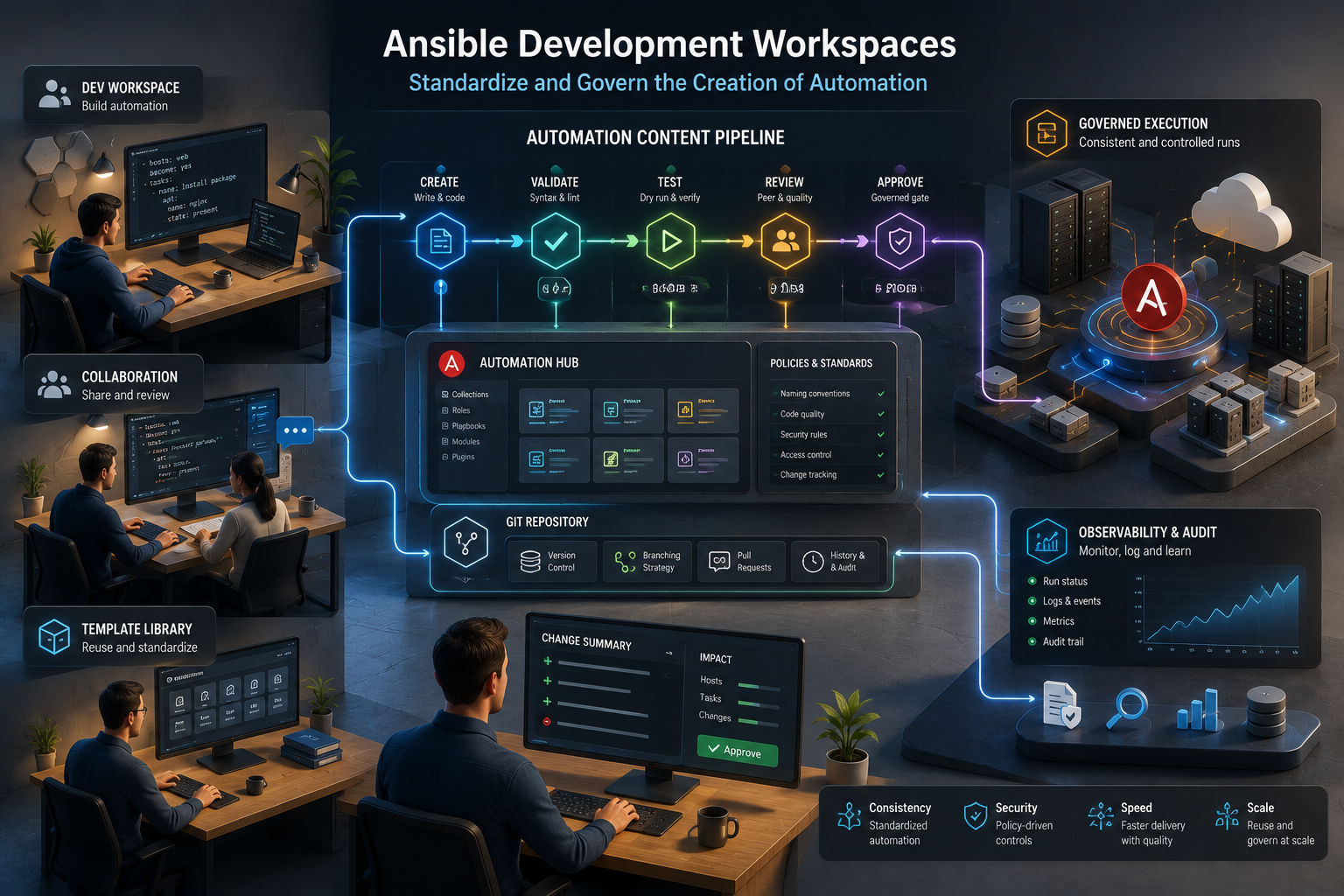
A development workspace can be viewed as a prepared context for contributors to create, test, and finish content. Its value is not a different editor; it is reducing the gap between an individual machine, a validation environment, and the platform’s expectations.
That consistency matters for Ansible because content can affect real infrastructure. Platform teams want contributors to encounter constraints, standards, and useful feedback early, rather than after the content has moved deep into a release process.
Governance should not mean more friction
Weak governance often appears as manual forms, late reviews, or overly broad access. Better governance makes the safer path the easier path. That makes a development workspace a DevOps platform-design concern, rather than merely a developer-tooling choice.
Teams should distinguish guardrails from gates. Guardrails guide contributors and prevent common mistakes while work is being created. Gates are explicit decision points before a consequential change. Both matter, but not every minor error needs a gate.
A practical trial
- Select a small group that contributes automation regularly.
- Identify recurring requirements: repository structure, review, checks, and access.
- Package those requirements into a consistent starting experience.
- Measure feedback time, early defect discovery, and manual exceptions.
Do not call the effort successful merely because a workspace exists. A stronger sign is that contributors can complete a compliant change without asking the platform team about every step, while operators retain necessary control.
Limits to acknowledge
A workspace does not make automation content correct or safe by itself. Quality still depends on playbook design, review, testing, and execution permissions. Nor does it replace workflow-owner accountability when automation has unintended effects.
Still, where an organization is expanding who can create automation, standardizing a golden path may be more valuable than continually adding documentation. Watch how this workspace theme connects with Red Hat’s orchestration and AI-tooling direction before treating it as a fixed standard.
In 5 Minutes
- Red Hat frames development workspaces around governed Ansible content creation.
- The aim is a consistent development context, not just a new IDE.
- Put guardrails early in the path to reduce late manual review.
- Trial with frequent contributors and measure exceptions as well as feedback time.
Image brief for editors
These production notes are not part of the published article. Create and insert the images before approval.
Thumbnail
Suggested placement: Article cover image
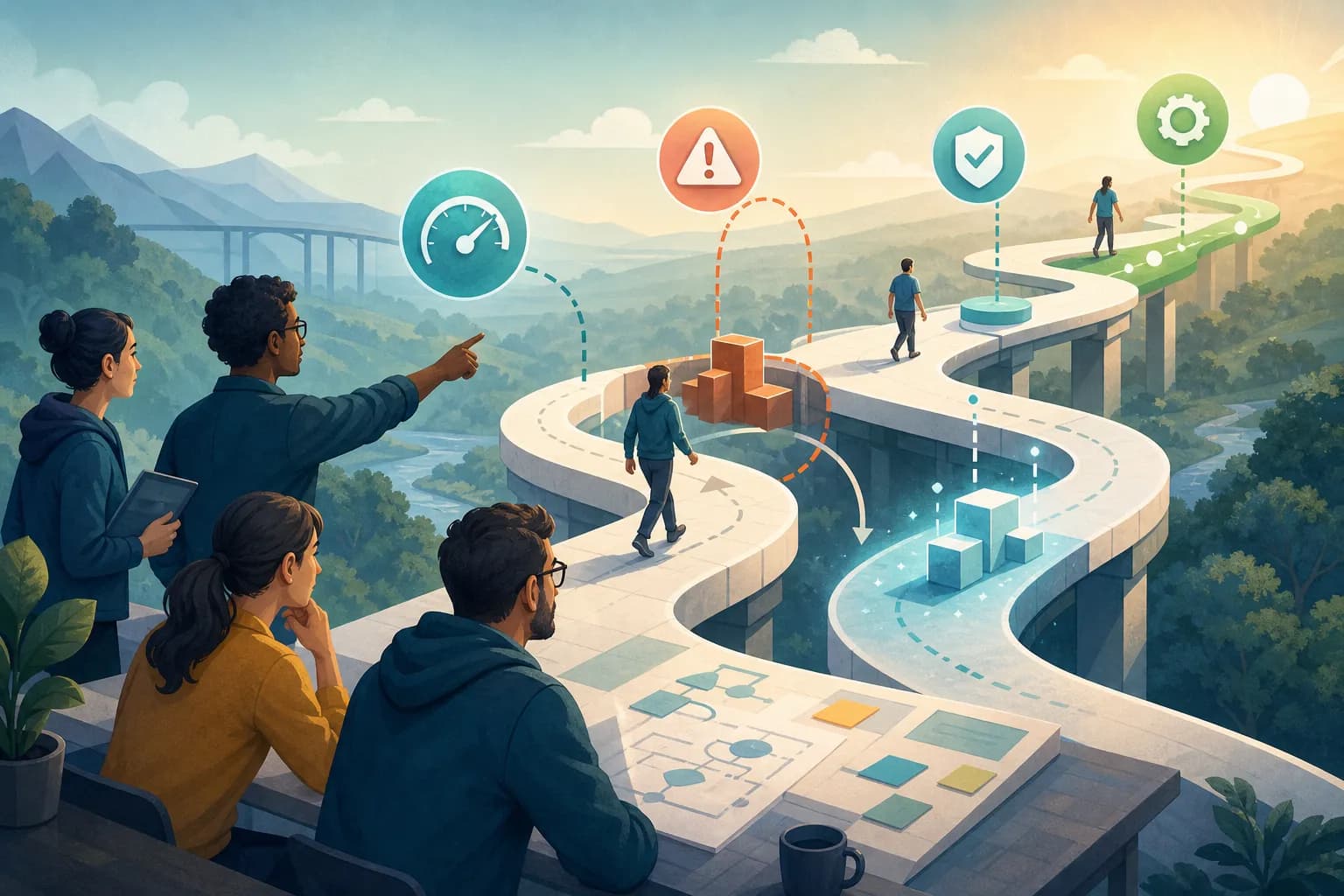
Image prompt: Editorial illustration of diverse engineers collaboratively shaping a structured automation blueprint inside a clean shared development environment, subtle safety rails around the blueprint, infrastructure elements in background, no text, no letters, no logos, no watermark, no UI
Suggested alt text: Engineers creating automation content in a shared development environment with guardrails.
In-article image 1
Suggested placement: After the “What a workspace is meant to solve” section
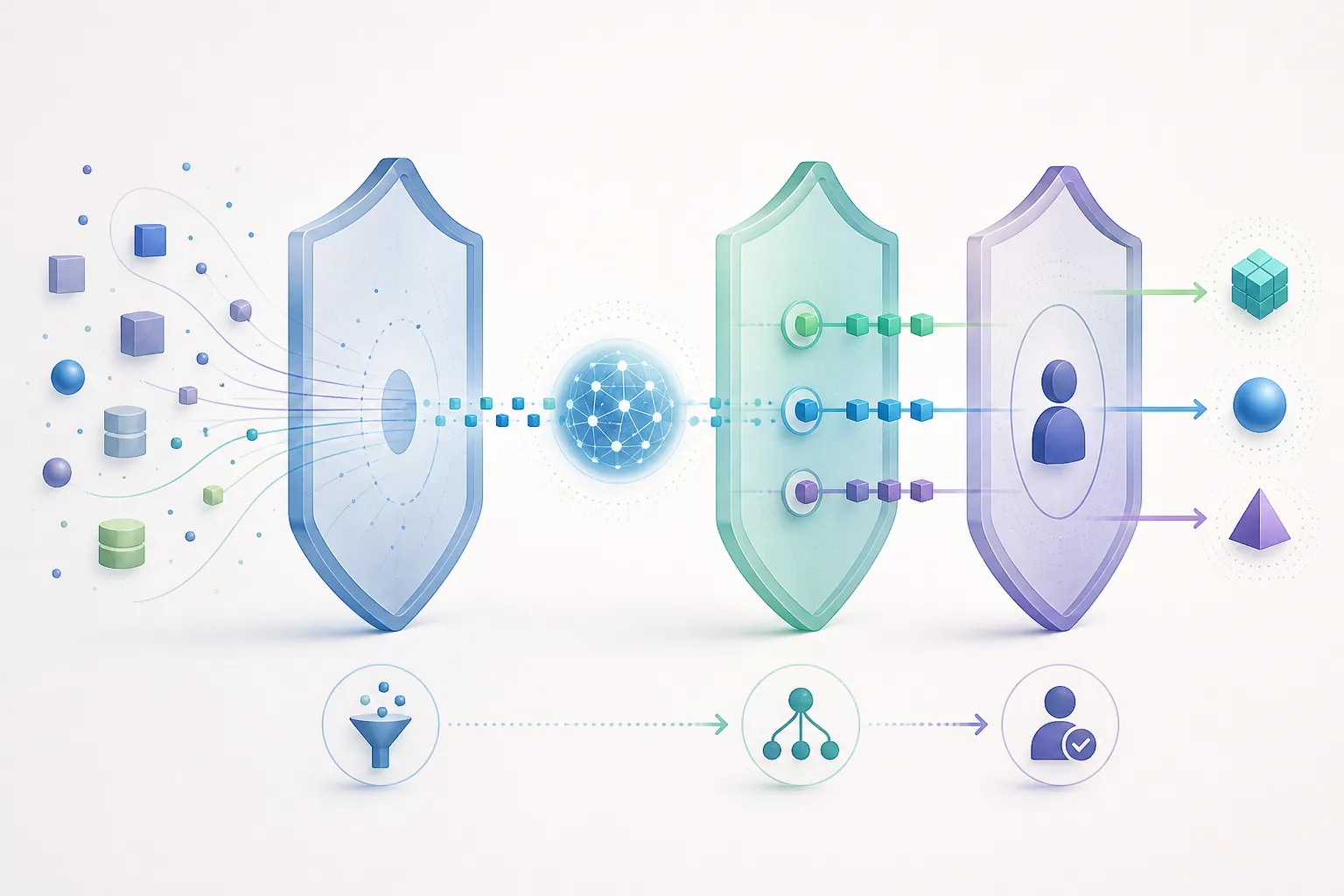
Image prompt: Editorial scene showing a single automation blueprint progressing from a developer workstation through validation blocks to controlled infrastructure deployment, visual consistency across stages, no text, no letters, no logos, no watermark, no interface
Suggested alt text: Automation content moving through consistent development, validation, and controlled deployment stages.
Sources
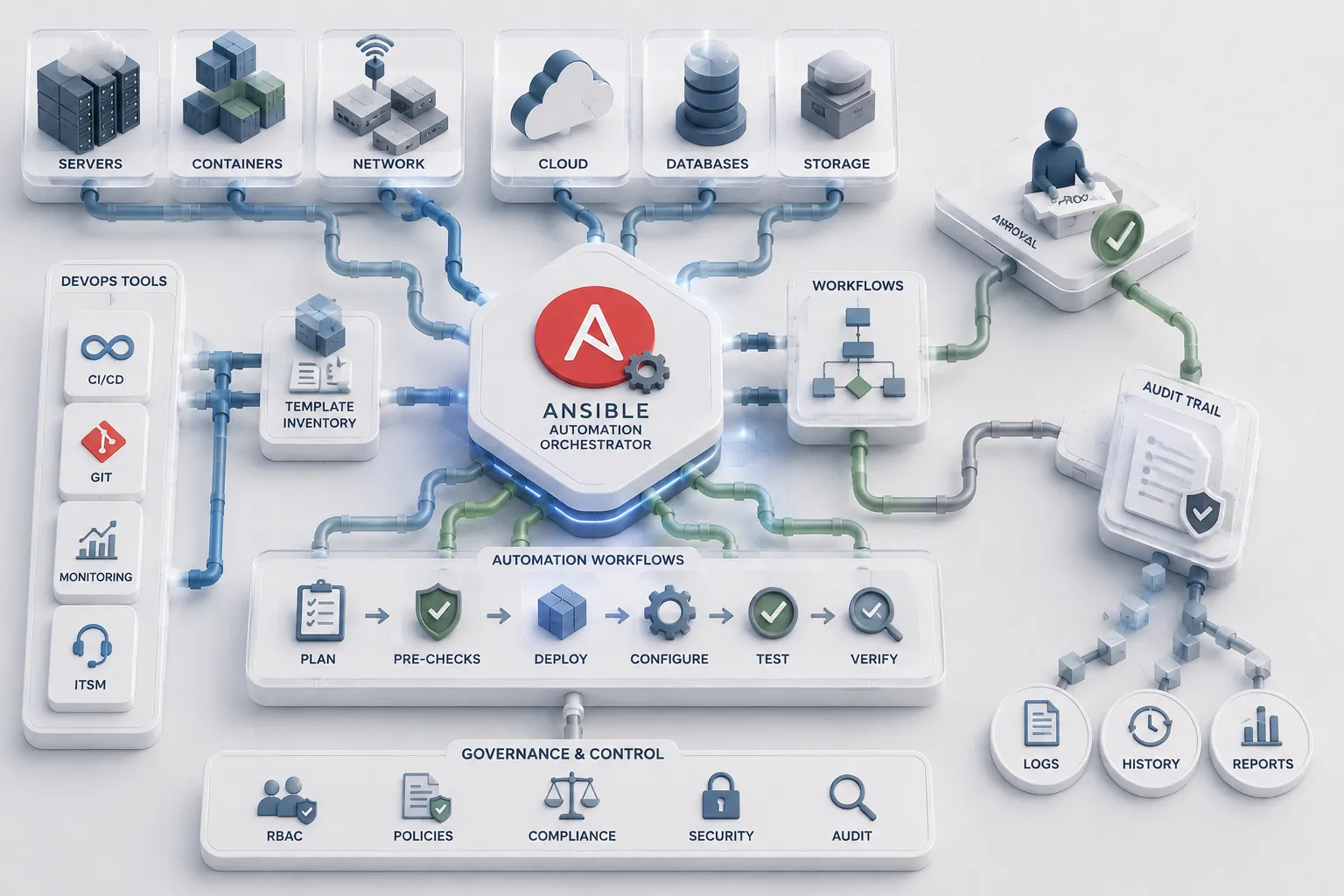
- Unify IT workflows at scale with the new automation orchestrator for Ansible Automation Platform
- Red Hat Ansible development workspaces for governed automation content creation
- Accelerate automation with AI and the Ansible development tools MCP servers
- Securing Claude Code plug-ins: Best practices for repository security
- Developer experience improvements you can apply to your own projects
Why developers should care
Automation content is operational code. As contributor counts rise, inconsistent creation and control practices quickly become an operational risk.
Recommended action
- 1Pilot a workspace with frequent automation contributors and explicitly identify which guardrails can move earlier in the development path.