Quick summary
- Red Hat’s new guidance on securing Claude Code plug-ins foregrounds repository security as AI tools enter developer workflows. For DevOps teams, plug-in assessment should cover code, configuration, access, and release paths together.
- AI plug-ins can introduce new behavior and authority into development environments; the repository is where reviewable, auditable controls should begin.
- Inventory existing AI plug-ins and require review of their code, configuration, dependencies, and requested access before wider use.
What happened
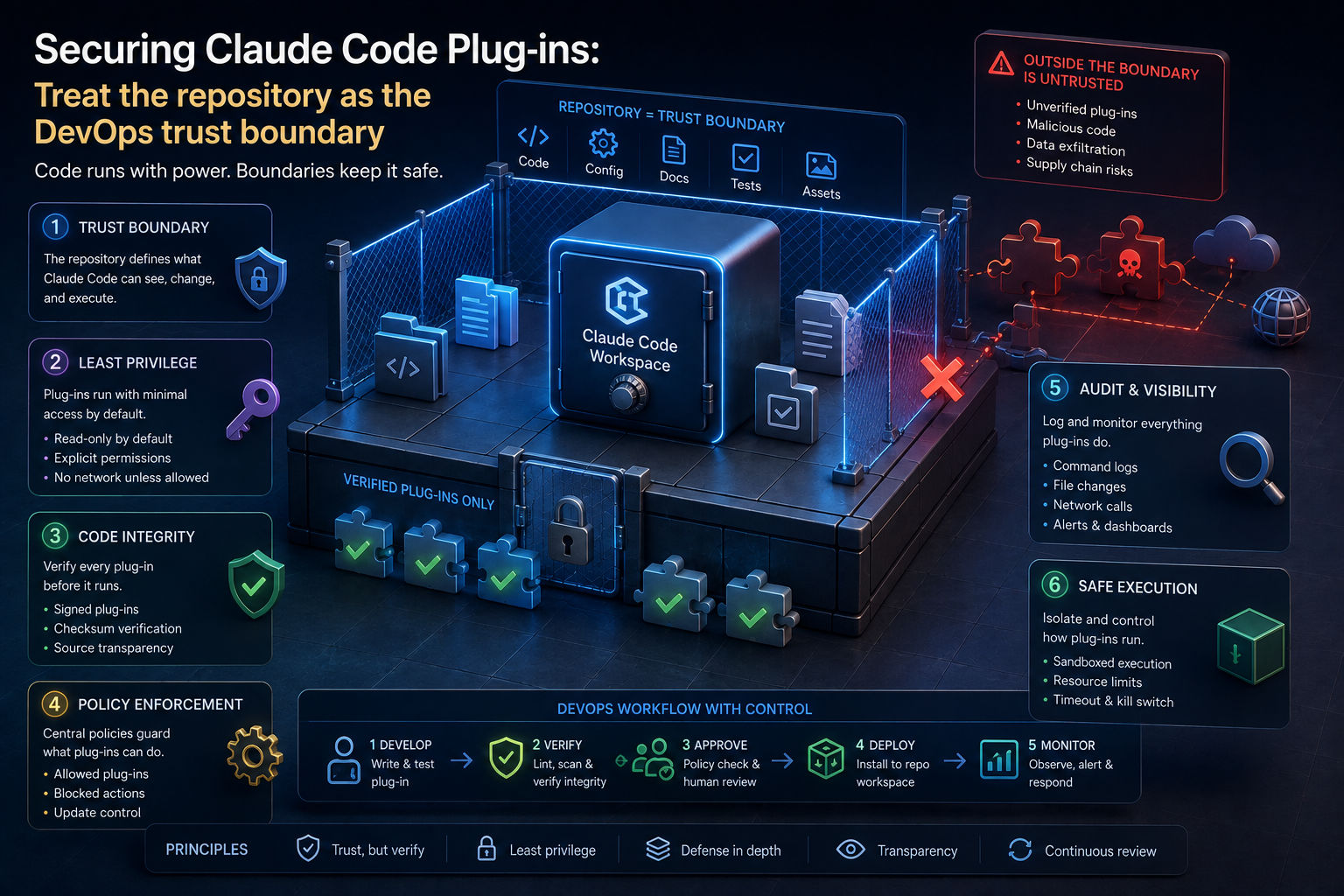
AI tools in developer environments are often judged by answer quality, but their risk surface is much larger. A plug-in can bring code, configuration, and new connections into a workflow. Red Hat’s Claude Code plug-in guidance therefore puts repository security in the right place: as a DevOps trust boundary.
The article on securing Claude Code plug-ins with repository security best practices establishes that Red Hat sees repository security as part of plug-in use. The supplied source does not specify every configuration detail, so teams should compare the original guidance with their own architecture.
Why plug-ins need their own threat model
A plug-in is not merely a convenient interface. It can be the point where external content, commands, or data enter the development environment. With coding assistants, context and access choices also influence what the tool can observe or propose.
Begin threat modeling with direct questions: where does the plug-in originate, what can change it, what data can it receive, and which actions can it initiate? Do not equate “installed in a repository” with “trusted.”
Repository security is an operational control
A repository can be where teams apply review, change history, and release practice to plug-in-related content. That turns security from an individual installation choice into an inspectable practice. For platform teams, it creates a basis for setting standards before a plug-in spreads widely.
A sound policy should cover executable content and configuration changes alike. A small configuration or dependency change can have consequences comparable to a code change. Protect branches and release flows according to impact, not only file type.
A checklist before wider use
- Identify a technical owner and an accountable approver for every plug-in.
- Review origin, dependency changes, and the access the plug-in requires.
- Constrain sensitive data that a plug-in or assistant can receive.
- Require review for related code and configuration changes.
- Prepare a way to revoke or disable the plug-in after unwanted behavior.
This is an assessment framework, not a claim that every item is mandated by Red Hat’s article. Its purpose is to turn “secure plug-in use” into owned, demonstrable technical decisions.
Do not make security an opaque bottleneck
A blanket ban often pushes tool use into unmanaged territory. An approved path with clear criteria and periodic review is usually more effective. Developers should know how to request a new plug-in and what can block the request.
The broader lesson is not limited to Claude Code. It applies to any component connecting an AI assistant to a repository or development environment. As AI tooling expands, repository governance becomes part of platform-engineering capability.
In 5 Minutes
- Red Hat published Claude Code plug-in security guidance focused on repository security.
- Assess plug-in code, configuration, data, and authority together.
- Use ownership, review, and revocation as operational controls.
- Build a clear approval path instead of only banning AI tools.
Image brief for editors
These production notes are not part of the published article. Create and insert the images before approval.
Thumbnail
Suggested placement: Article cover image
Image prompt: Editorial illustration of a secure code repository depicted as a guarded vault containing carefully reviewed modular extensions, with engineers inspecting pathways and access keys represented abstractly, no text, no letters, no logos, no watermark, no UI
Suggested alt text: A protected repository containing carefully reviewed plug-in modules.
In-article image 1
Suggested placement: After the “Why plug-ins need their own threat model” section
Image prompt: Editorial cybersecurity scene of an engineer reviewing an extension package at a repository gate, with separated paths for code, configuration, data, and permissions shown as colored abstract channels, no text, no letters, no logos, no watermark, no UI
Suggested alt text: Engineer assessing a plug-in at a repository boundary with separate code, configuration, data, and permission paths.
Sources
- Unify IT workflows at scale with the new automation orchestrator for Ansible Automation Platform
- Red Hat Ansible development workspaces for governed automation content creation
- Accelerate automation with AI and the Ansible development tools MCP servers
- Securing Claude Code plug-ins: Best practices for repository security
- Developer experience improvements you can apply to your own projects
Why developers should care
AI plug-ins can introduce new behavior and authority into development environments; the repository is where reviewable, auditable controls should begin.
Recommended action
- 1Inventory existing AI plug-ins and require review of their code, configuration, dependencies, and requested access before wider use.