Quick summary
- AI agents are being applied to security work that takes action: testing codebases, exploiting vulnerabilities, assessing blast radius, and coordinating response. Cases from AWS, HackerOne, Wiz, and Cisco Talos illustrate the potential for speed—and the need for strict controls over identity, evidence, and execution.
- Once an AI system can authenticate, invoke tools, and change systems instead of merely suggesting steps, errors can propagate at machine speed. Engineering teams must treat agents as privileged identities and introduce autonomy in auditable stages.
- Pilot one read-only security workflow or isolated test environment, defining autonomy, tool permissions, stop conditions, evidence retention, and success criteria before granting write access.
What happened
AI agents are moving beyond read-only assistance and into security loops that observe, reason, invoke tools, and verify results. The consequential change is not simply a better model; it is the combination of a model with identity, system access, and permission to carry out a sequence of actions.
Accounts from AWS, HackerOne, Wiz, and Cisco Talos show different sides of this shift, including machine-speed defense, codebase testing, controlled exploitation, and incident operations. They do not establish that agents can replace security teams, but they do justify treating agentic security as a new operational layer that requires its own governance.
What changes when an assistant becomes an agent?
A conventional assistant might summarize an alert or draft a command for a person to review. An agent goes further: it can authenticate on a user's behalf, execute multistep workflows, and make decisions across systems, capabilities described in AWS's account of agentic detection and response.
That loop can compress the distance between detection and action. Instead of sending every task through separate manual queues, an agent can gather context, choose a tool, test a hypothesis, and use the result to determine its next step.
Autonomy, however, is a spectrum rather than an on-off switch. One system may only recommend remediation, another may run read-only checks, and another may isolate a resource. Each level calls for a different approval policy and an explicitly accepted blast radius.
What do the published cases actually demonstrate?
HackerOne's Project Glasswing reports on running a frontier model against the company's own codebase. The relevant distinction is the use of an organization's real code environment rather than isolated security questions or synthetic exercises.
Wiz describes a more specific sequence. According to the company, Wiz Red Agent independently found and exploited a GitHub Actions injection associated with a GitHub Copilot-assisted pull request. The issue was reportedly missed by GitHub Advanced Security; the agent then validated access to sensitive information in Snowflake's internal Jira and assessed the blast radius without human intervention.
This is a vendor account of its own system, not an independent benchmark, and teams should interpret it accordingly. Even so, the reported action chain is architecturally significant: finding a weakness, proving exploitability, following an access path, and assessing consequences is a substantially different workload from labeling a suspicious code fragment.
Cisco Talos highlights a separate tension. Its argument about a security “safety penalty” says increasingly restrictive frontier models may impede real-time incident response while adversaries do not necessarily operate under equivalent constraints. That is Talos's position, not evidence that safety measures inherently weaken defense; it points to the need for model and usage policies aligned with a well-defined defensive mission.
The failure mode shifts from a wrong answer to a wrong action
When a model only produces text, a mistaken conclusion usually remains separated from production by a human review step. Give an agent a token, service identity, or tool access, and the same mistake can become a configuration change, data query, or inappropriate containment action.
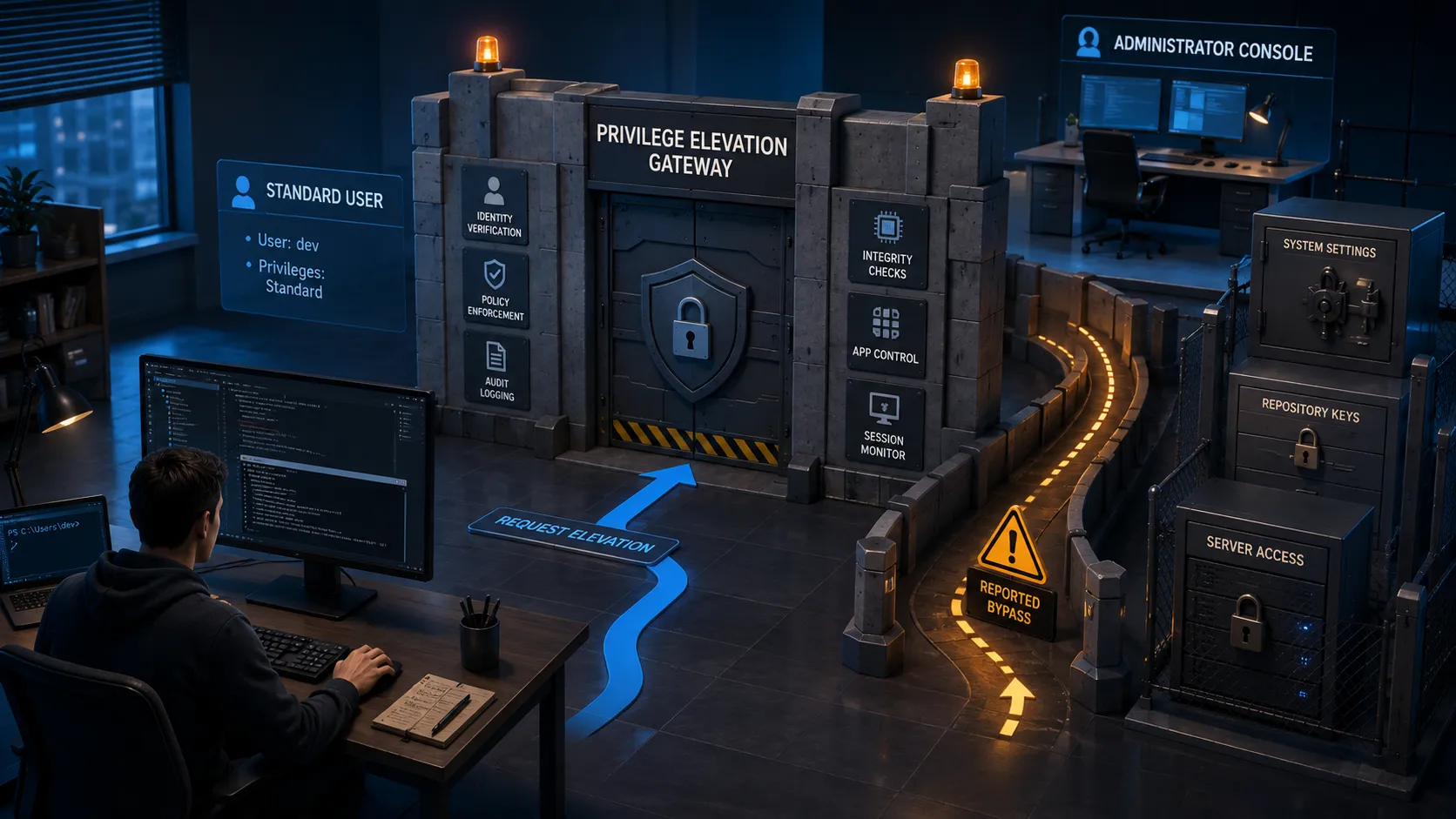
A security agent should therefore be managed as a privileged machine identity, not as a chatbot with APIs attached. Permissions should be least-privileged, short-lived, and segmented by environment. Secrets should not be inserted directly into model context when a brokered tool can perform the operation without disclosing them.
Observability must cover the complete decision chain: which inputs were consulted, which tools were invoked, which parameters were passed, what resources changed, and what evidence supported the conclusion. Operationally, this resembles designing a governed control plane more than adding an AI feature to an existing dashboard.
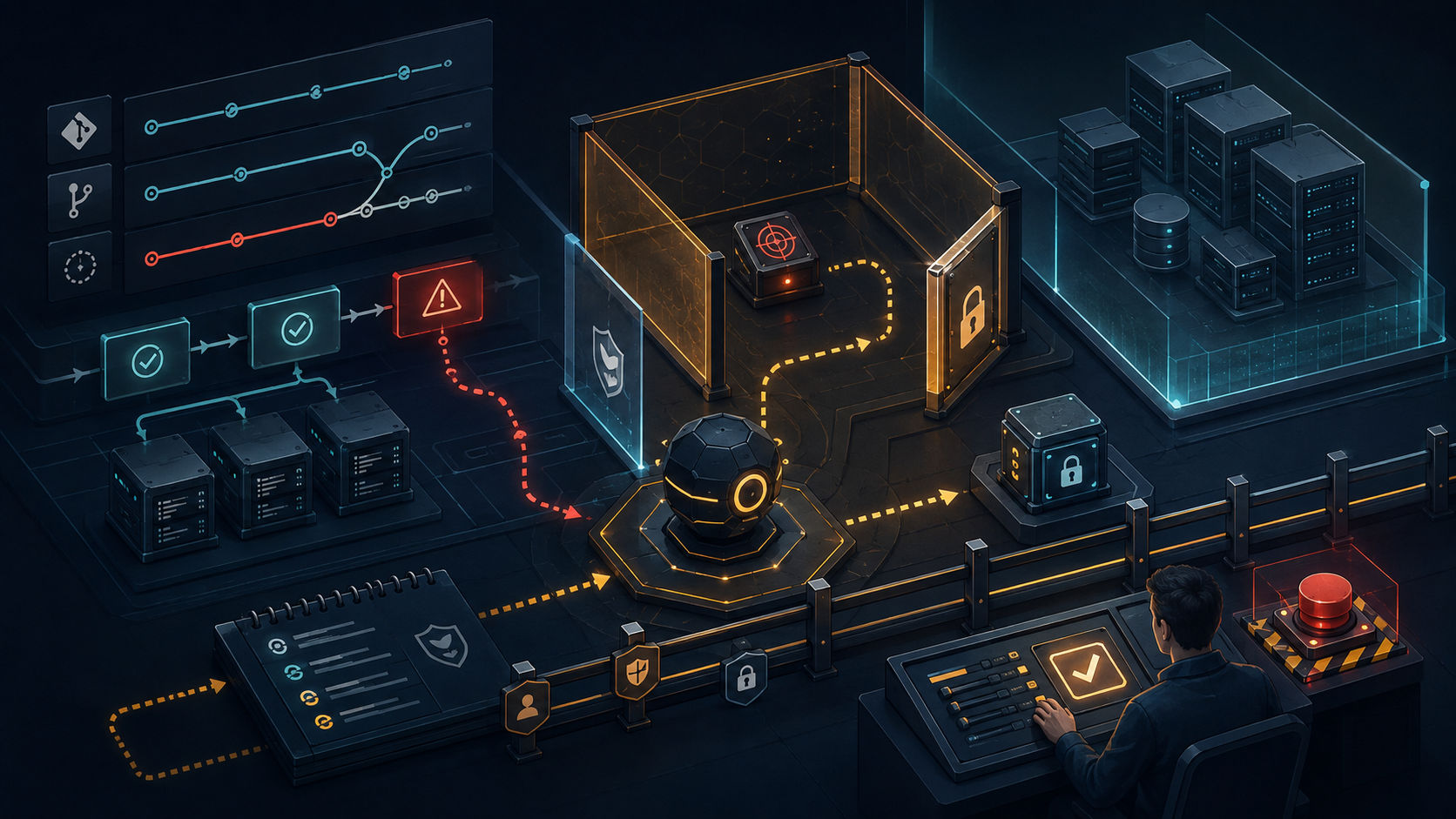
Exploit validation requires an additional boundary. Demonstrating that a vulnerability is exploitable can produce a stronger prioritization signal than a static warning, but it also introduces risks of disruption, unintended access, and sensitive-data retention. Target scope, stop conditions, and rules for handling evidence should be established before execution begins.
How should engineering teams evaluate agentic security?
A sensible starting point is a valuable workflow with a limited blast radius, such as alert enrichment or testing in an isolated environment. Teams should not begin with global write privileges or irreversible response actions simply because an agent can complete a compelling demonstration.
- Define autonomy levels: separate recommendation, approval-gated execution, and automatic execution. Map each level to specific resource classes and incident severity.
- Constrain identity and tools: apply least privilege, short-lived credentials, explicit tool allowlists, and rate limits.
- Require inspectable evidence: retain tool traces, affected resources, and the basis for an action rather than accepting a confident final statement.
- Build an exit path: preserve human approval for destructive operations, an emergency stop, and a way to restore prior state.
- Evaluate on authorized workflows: test against the organization's repositories, alerts, and policies in a permitted environment instead of extrapolating from a vendor demo.
Evaluation should capture both value and operational cost: time to a useful conclusion, proportion of actions approved, false positives, operations that require rollback, and completeness of audit records. The goal is not maximum automation. It is automation that can be shown to be safer or more effective than the workflow it replaces.
Teams should also test policy behavior, not only task completion. An agent that finds a vulnerability but ignores scope boundaries is not successful. Likewise, one that refuses every meaningful defensive step may be safe in a narrow sense while providing little operational value—the tension raised by Talos.
Conclusion
- AI agents turn security from a response-generation problem into an action-governance problem.
- Published cases indicate that detection, exploitation, and impact assessment can be connected within one loop.
- Least privilege, isolation, auditable evidence, and stop mechanisms should precede greater autonomy.
- For most teams, controlled assessment is more appropriate than broad production authority today.
Related reading
- Ventura React: Is this lightweight component library still fit for new projects?
- Nova MCP turns Cursor and Claude into a product-building team
- Ansible Automation Orchestrator: Designing a Governed Control Plane
Sources
- The safety penalty: Reclaiming operational sovereignty in the age of AI
- Agentic security: Detection and response at machine speed
- Project Glasswing: What We Learned Running a Frontier Model on Our Own Codebase
- Wiz Red Agent Finds Its Way Into Snowflake’s Internal Jira Through a Flaw in a GitHub Copilot–Assisted PR
Why developers should care
Once an AI system can authenticate, invoke tools, and change systems instead of merely suggesting steps, errors can propagate at machine speed. Engineering teams must treat agents as privileged identities and introduce autonomy in auditable stages.
Recommended action
- 1Pilot one read-only security workflow or isolated test environment, defining autonomy, tool permissions, stop conditions, evidence retention, and success criteria before granting write access.